What Is Thermal Modification?
Thermal modification (also called ThermoWood or heat treatment) is a chemical-free wood preservation process developed commercially in Finland in the 1990s and now standardized by the International ThermoWood Association. The process involves heating lumber to temperatures between 400-430°F (200-220°C) in an oxygen-free kiln for 24-48 hours.
The absence of oxygen prevents combustion — the wood is effectively "cooked" rather than burned. This controlled pyrolysis permanently changes the wood's chemistry and cellular structure in three critical ways:
- Hemicellulose decomposition: The sugars that fungi and decay organisms feed on are broken down into inert compounds. Without a food source, rot cannot establish.
- Cell wall restructuring: The hydroxyl groups that attract and bond with water molecules are permanently reduced, cutting moisture absorption by 40-50% compared to untreated wood of the same species.
- Resin polymerization: Natural resins cross-link into stable polymers, improving dimensional stability and reducing swelling/shrinking cycles by up to 70%.
The result is wood that resists decay, absorbs less water, and remains dimensionally stable — achieving performance comparable to tropical hardwoods or chemically treated lumber, without any added substances.
"We've been in the lumber business for 226 years. Thermal modification is the most significant advancement in wood preservation since pressure treatment was introduced in the early 1900s — except this time, there are no chemicals to worry about. The wood goes into the kiln as lumber and comes out as a completely different material at the cellular level."
— Brett Miller, President, J. Gibson McIlvain Co.
How Thermal Modification Changes Wood Cell Structure
Understanding why thermally modified wood performs differently requires examining what happens at the cellular level during the 24-48 hour heating process:
According to research published by the USDA Forest Products Laboratory, thermal modification at temperatures above 200°C (392°F) causes irreversible chemical changes in all three primary wood polymers:
- Hemicellulose (20-35% of wood mass): Almost completely degraded. This is the primary food source for brown-rot and white-rot fungi. Its elimination is the main mechanism behind improved durability.
- Cellulose (40-50% of wood mass): Partially affected — crystallinity increases while amorphous regions degrade. This explains the 10-20% reduction in MOR (modulus of rupture) strength.
- Lignin (20-30% of wood mass): Cross-links and becomes more hydrophobic, contributing to reduced water uptake and the characteristic dark brown color.
The net effect: equilibrium moisture content drops from 12-15% (typical for untreated softwoods) to 4-7% in thermally modified wood. This low moisture content makes the wood inhospitable to decay fungi, which require 20%+ moisture content to colonize wood tissue.
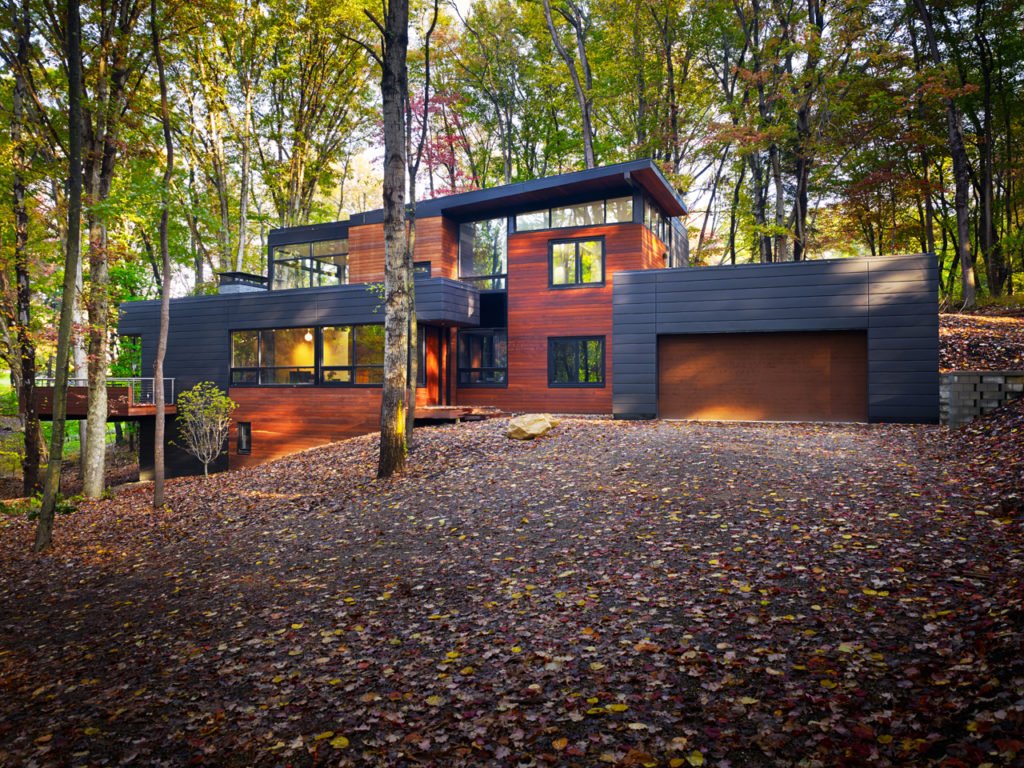
Class 1 Durability Without Chemicals
Under the European EN 350 durability classification system, thermally modified ash achieves Class 1 (very durable) — the same rating as Ipe, teak, and other premium tropical hardwoods. Thermally modified pine and spruce typically achieve Class 2 (durable) depending on treatment intensity.
This matters because Class 1 durability means the wood resists decay in ground-contact applications for 25+ years without any chemical treatment — verified through accelerated laboratory testing and field studies conducted by research institutions including the USDA Forest Products Laboratory and the International ThermoWood Association.
Head-to-Head Comparison: Thermally Modified vs. Pressure-Treated vs. Composite
| Property | Thermally Modified (Ash) | CCA Pressure-Treated (legacy) | ACQ Pressure-Treated | Composite (Trex/TimberTech) |
|---|---|---|---|---|
| Chemical Preservatives | None — heat only | Chromium, copper, arsenic | Copper, quaternary ammonium | None (but petroleum-derived) |
| Durability Class (EN 350) | Class 1 (very durable) | Class 1 (very durable) | Class 1-2 (durable) | Not rated (synthetic) |
| Expected Lifespan | 25-30+ years (above ground) | 40-60 years | 15-25 years | 25-30 years |
| Moisture Absorption | 40-50% less than untreated | Normal (wood still absorbs) | Normal (wood still absorbs) | Very low (synthetic) |
| Dimensional Stability | Excellent — 50-70% less movement | Poor — warps and cups | Poor — warps and cups | Good (but thermal expansion) |
| Toxic Leaching | None | Arsenic leaches into soil | Copper leaches into soil | Microplastic shedding |
| Safe for Food/Play Contact | Yes | No — EPA restricted 2003 | Debated — copper concerns | Yes |
| End-of-Life Disposal | Compostable / burnable | Hazardous waste | Landfill only (not burnable) | Landfill (not recyclable) |
| Material Cost (per sq. ft.) | $6.00-$9.00 | $2.00-$3.50 (legacy/commercial) | $2.50-$4.00 | $8.00-$12.00 |
| Installed Cost (per sq. ft.) | $14.00-$20.00 | $8.00-$12.00 | $9.00-$13.00 | $18.00-$28.00 |
| Structural Strength | 10-20% reduced MOR vs. untreated | Unchanged | Unchanged | Low — requires 12" joist spacing |
| Heat Retention (barefoot) | Low — stays cool | Moderate | Moderate | High — hot in direct sun |
| Appearance | Rich dark brown, natural grain | Green tint, weathers gray | Green/brown tint, weathers gray | Simulated wood grain (uniform) |
| Carbon Footprint | Carbon-negative (wood sequesters CO2) | Low (wood + chemical transport) | Low (wood + chemical transport) | High (petroleum processing) |
The EPA History: Why CCA Was Banned From Residential Use
To understand why thermally modified wood has gained such momentum, it helps to understand the history of the product it replaces.
CCA (Chromated Copper Arsenate) was the dominant wood preservative in the United States from the 1970s through 2003. According to the U.S. Environmental Protection Agency (EPA), approximately 90% of all outdoor residential lumber sold in the U.S. before 2004 was CCA-treated.
In 2003, the EPA brokered a voluntary agreement with CCA manufacturers to phase out CCA-treated wood for residential applications effective December 31, 2003. The decision followed mounting evidence that:
- CCA-treated wood leaches arsenic into surrounding soil at concentrations exceeding the EPA's own safe-exposure thresholds
- Children playing on CCA-treated playground equipment showed elevated arsenic levels on their hands
- The EPA estimated that the lifetime cancer risk from regular contact with CCA-treated structures exceeded acceptable levels (greater than 1 in 10,000)
- CCA-treated wood cannot be safely burned — combustion releases concentrated arsenic into the air
CCA was replaced primarily by ACQ (Alkaline Copper Quaternary) and Copper Azole (CA-B). While less toxic than CCA, these replacements still rely on copper compounds that leach into soil and are corrosive to standard metal fasteners — requiring more expensive stainless steel hardware. According to research cited by the EPA, copper-based preservatives can be toxic to aquatic organisms when they leach into waterways near docks and shoreline structures.
Thermally modified wood eliminates this entire category of concern. No chemicals are added. No chemicals can leach. The wood is safe for direct food contact, playground construction, and aquatic-adjacent applications.
Species Available: Thermally Modified Options
Not all species respond equally to thermal modification. The best commercial results come from these species, all of which J. Gibson McIlvain carries in multiple profiles:
| Species | Durability After Modification | Janka Hardness | Best Applications | Price Range (per sq. ft.) |
|---|---|---|---|---|
| Ash (Fraxinus excelsior) | Class 1 — Very Durable | ~1,320 lbf | Decking, cladding, outdoor furniture | $7.50-$9.00 |
| Scots Pine (Pinus sylvestris) | Class 2 — Durable | ~540 lbf | Cladding, soffits, interior sauna | $6.00-$7.50 |
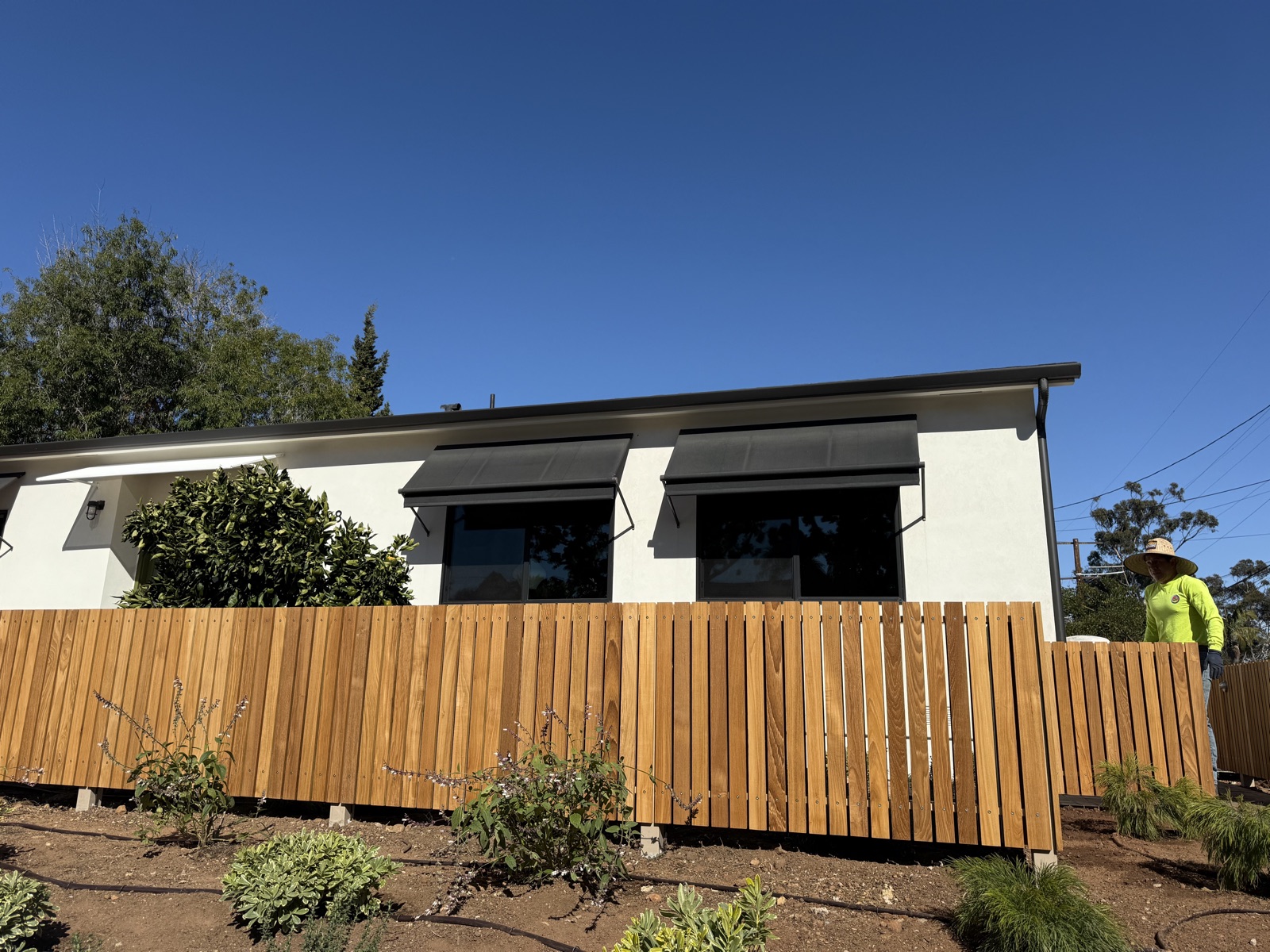
| Radiata Pine (Pinus radiata) | Class 2 — Durable | ~510 lbf | Cladding, fencing, landscape | $5.50-$7.00 |
| Spruce (Picea abies) | Class 3 — Moderately Durable | ~490 lbf | Interior cladding, sauna, paneling | $5.00-$6.50 |
Thermally modified ash is the standout performer. Its combination of Class 1 durability, moderate hardness (suitable for barefoot traffic), and rich dark-brown coloring makes it the most popular choice for decking and exterior cladding. It has the highest density of the commonly modified species, which translates to better screw-holding capacity and wear resistance.
Thermory and Brand Options at McIlvain
J. Gibson McIlvain is an authorized distributor of Thermory, the world's leading manufacturer of thermally modified wood products. Based in Estonia with manufacturing operations running since 1997, Thermory processes over 100,000 cubic meters of thermally modified lumber annually.
Thermory products available through McIlvain include:
- Thermory Benchmark decking — thermally modified ash in smooth, grooved, and D4 profiles (1x6, 5/4x6)
- Thermory cladding — ash and pine profiles for rainscreen and direct-attach exterior siding
- Thermory sauna products — spruce and alder panels specifically designed for high-heat, high-humidity environments
- Thermory Ignite — charred (shou sugi ban) thermally modified wood for dramatic exterior cladding
All Thermory products carry a 25-year warranty against rot and decay when installed per manufacturer specifications. The warranty covers Class 1 rated products in above-ground exterior applications.
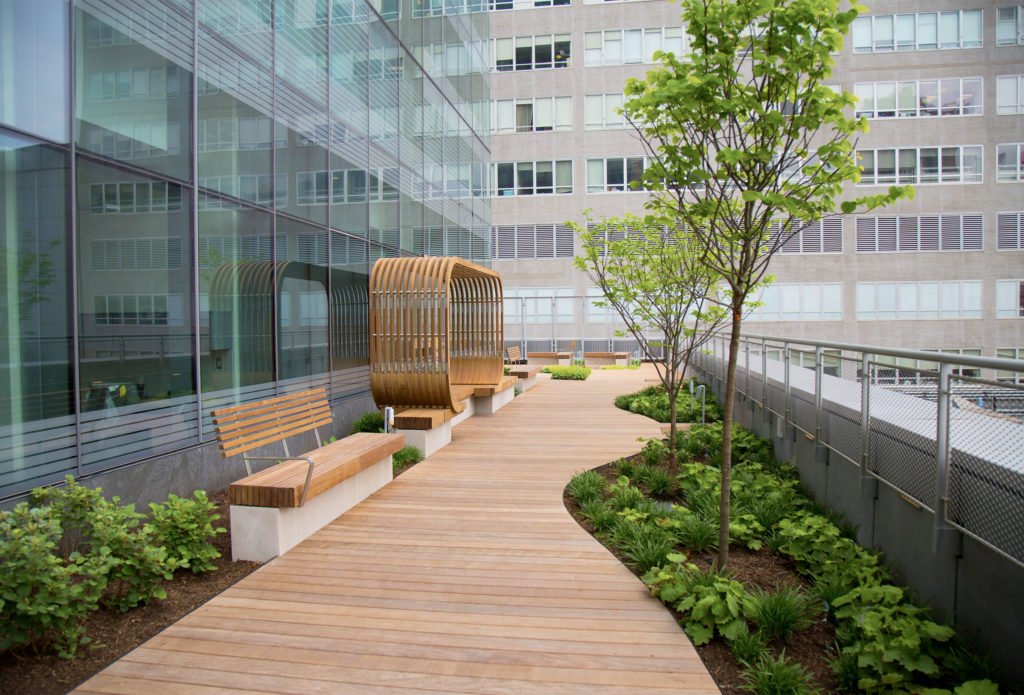
Cost Comparison: Thermally Modified Wood Per Square Foot
Here's the complete installed cost comparison for a typical 400 sq. ft. residential deck in 2026:
| Cost Component | Thermally Modified Ash | ACQ Pressure-Treated Pine | Composite (mid-range) |
|---|---|---|---|
| Materials (decking boards) | $3,000-$3,600 | $1,000-$1,600 | $3,200-$4,800 |
| Fasteners | $350-$500 (stainless hidden clips) | $150-$250 (coated screws) | $300-$450 (proprietary clips) |
| Labor | $2,400-$3,200 | $1,800-$2,400 | $2,800-$3,600 |
| Total installed cost | $5,750-$7,300 | $2,950-$4,250 | $6,300-$8,850 |
| Cost per sq. ft. installed | $14.38-$18.25 | $7.38-$10.63 | $15.75-$22.13 |
| 25-Year Lifecycle Cost (incl. maintenance) | $6,500-$8,500 | $7,000-$10,500 (stain + replace) | $6,800-$9,500 |
The bottom line: Thermally modified wood costs approximately 60-80% more than pressure-treated lumber upfront but delivers significantly lower lifecycle costs. Pressure-treated pine typically requires restaining every 2-3 years ($400-$600 per application for a 400 sq. ft. deck) and replacement at 15-20 years, while thermally modified ash requires only periodic cleaning and carries a 25-year warranty.
Compared to composite decking, thermally modified wood is 10-25% less expensive installed while offering a real-wood aesthetic, lower heat retention in direct sun, and carbon-negative environmental credentials.
Environmental Advantages
The environmental case for thermally modified wood is compelling across the entire product lifecycle:
- No toxic leaching: Zero chemicals means zero contamination of soil, groundwater, or aquatic ecosystems. Safe for installation over gardens, near ponds, and in watershed-sensitive areas.
- Carbon-negative material: Wood sequesters CO2 throughout its service life. A 400 sq. ft. thermally modified deck stores approximately 2,400 lbs of carbon dioxide equivalent.
- End-of-life compostable: Unlike pressure-treated wood (hazardous waste) or composite decking (landfill-only), thermally modified wood can be composted, chipped for mulch, or safely burned at end of life.
- Reduced transport footprint: Softwood species (pine, spruce) can be sourced domestically or from Northern Europe, avoiding the long-distance shipping required for tropical hardwoods from South America or Africa.
- Low-energy process: The modification kiln is typically heated by burning wood waste from the milling process itself, creating a largely self-sustaining energy loop.
"When a customer asks me for an exterior wood product that they can feel good about environmentally — no chemicals touching their kids, no toxins leaching into their garden, and something they can actually compost in 30 years when they renovate — thermally modified wood is the only answer that checks every box. Pressure-treated cannot. Composite cannot. Only heat-treated real wood delivers zero-chemical durability with a clean end-of-life story."
— Brett Miller, President, J. Gibson McIlvain Co.
Best Applications for Thermally Modified Wood
Thermally modified wood excels in these specific applications:
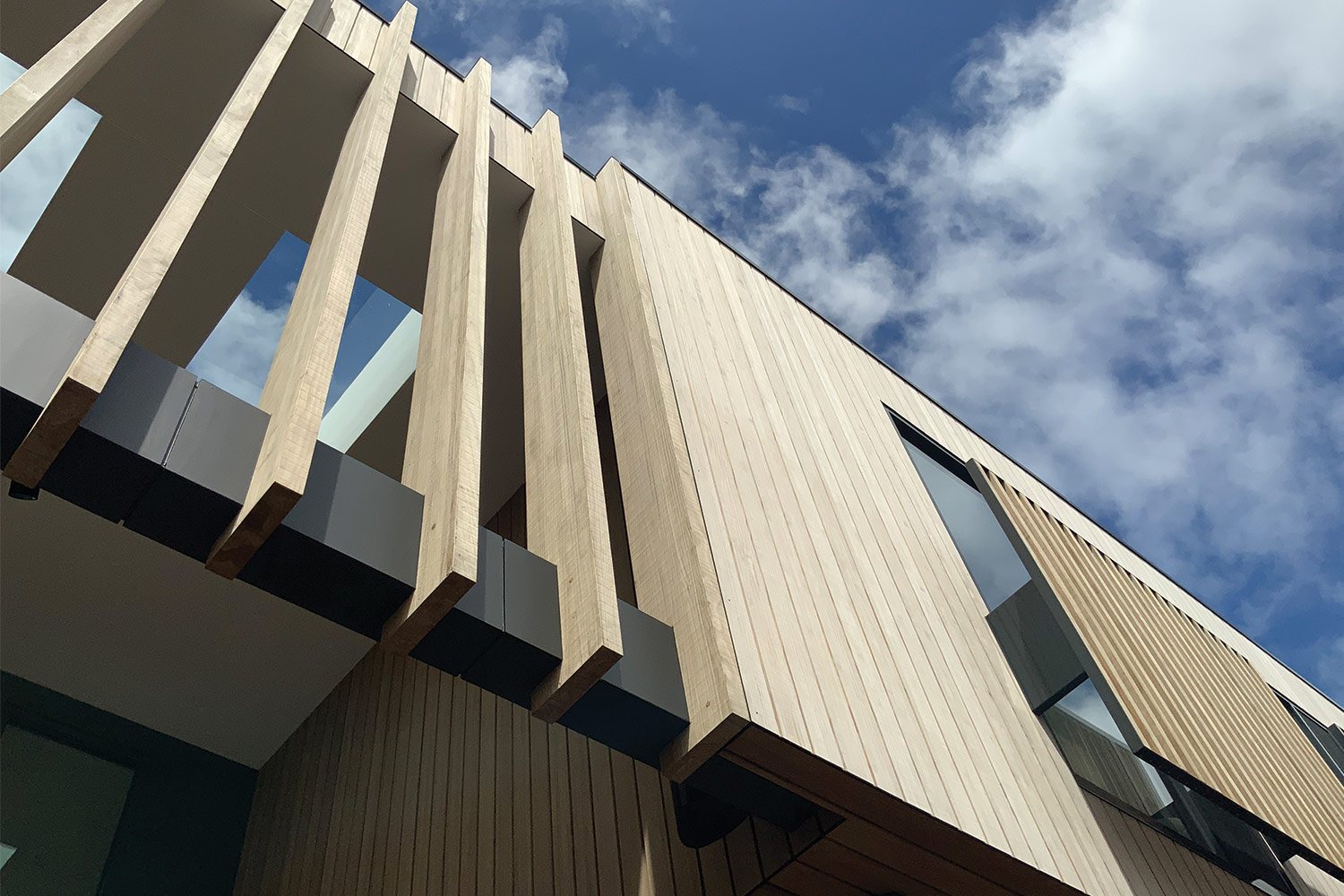
Exterior Cladding (Rainscreen Siding)
Dimensional stability (50-70% less seasonal movement) makes thermally modified wood ideal for cladding systems. Reduced expansion and contraction means fewer callbacks for gapping, cupping, and fastener failure. Thermory offers multiple cladding profiles optimized for ventilated rainscreen installation.
Decking
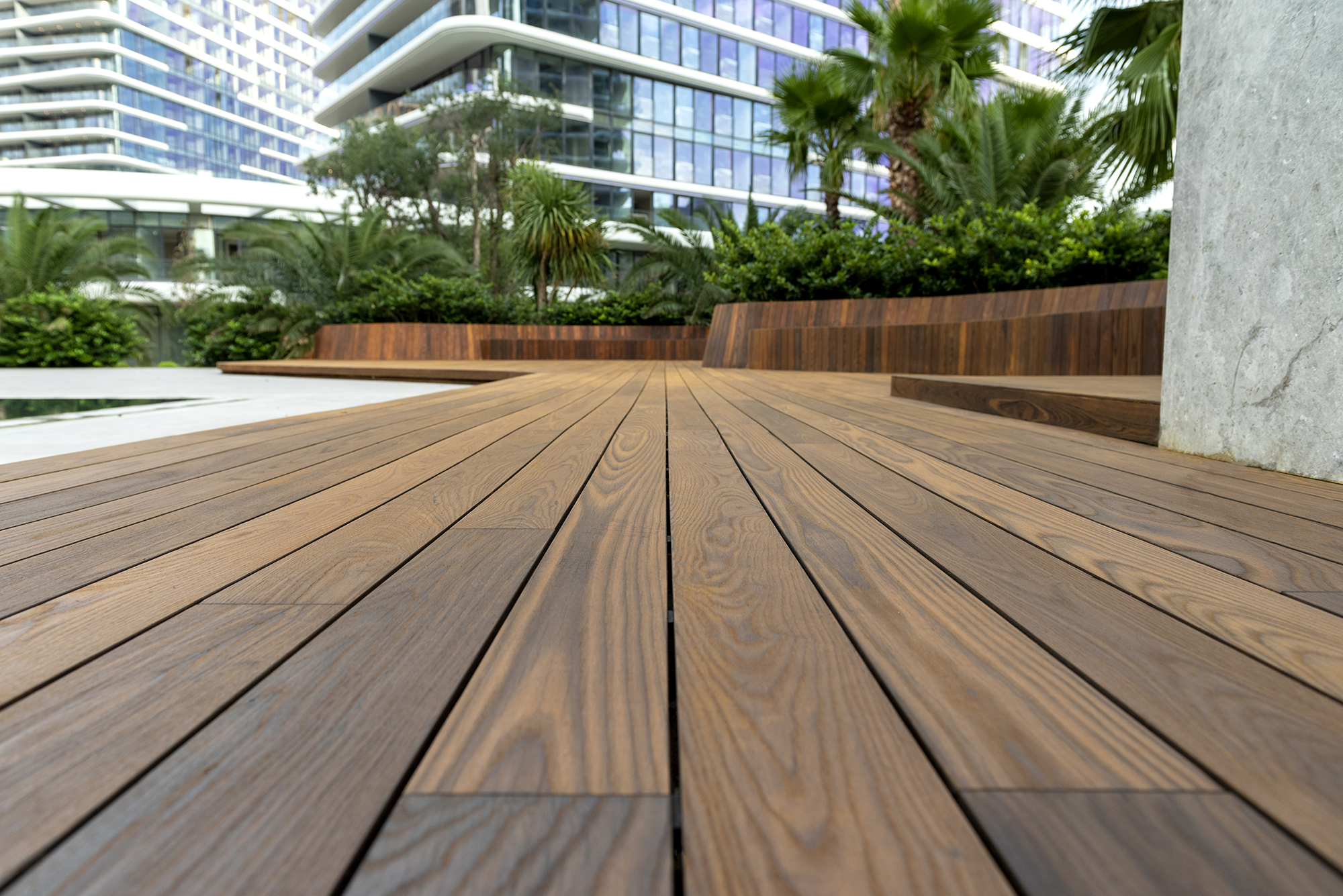
Thermally modified ash provides a barefoot-friendly surface that stays cooler than composite, resists splinters, and maintains its appearance with minimal maintenance. The darker color weathers gracefully to silver-gray if left unfinished, or retains its warm brown with annual UV oil.
Saunas and Steam Rooms
The low moisture absorption and thermal conductivity of modified spruce and alder make them the preferred wood for sauna interiors worldwide. Modified wood does not exude resin at sauna temperatures (unlike untreated softwoods) and resists the constant wet-dry cycling of steam room environments.
Outdoor Furniture and Structures
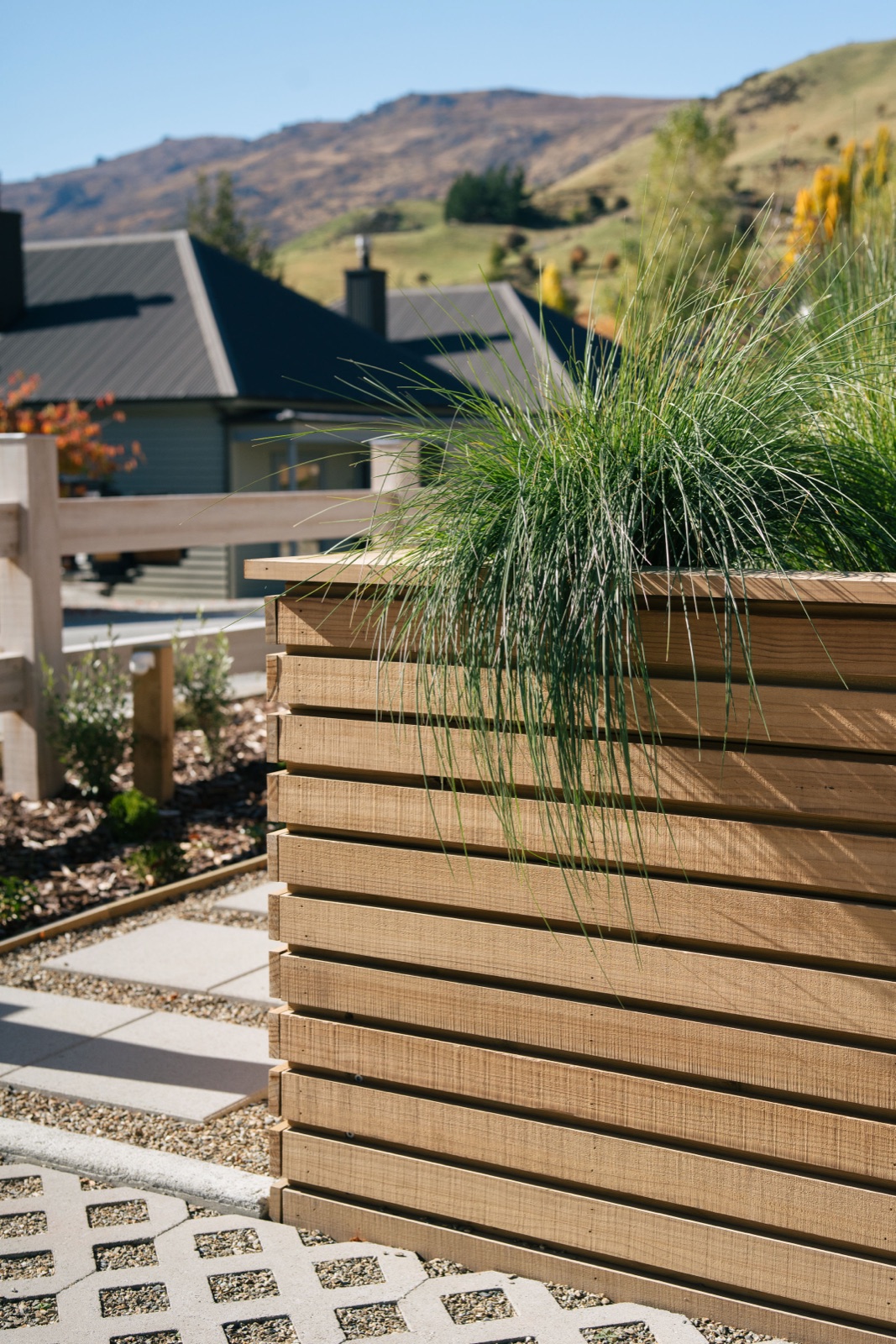
Pergolas, planters, benches, and arbors benefit from the material's dimensional stability and rot resistance. Unlike pressure-treated wood, thermally modified wood can be left unfinished in garden applications without concern about chemical contact with plants or soil organisms.
Window and Door Frames
European manufacturers increasingly specify thermally modified pine for window frames, where dimensional stability is critical to prevent binding, gaps, and seal failure through seasonal humidity changes.
Frequently Asked Questions
What is thermally modified wood?
Thermally modified wood is lumber heated to 400-430°F (200-220°C) in an oxygen-free kiln for 24-48 hours. This process permanently alters the wood's cell structure by breaking down hemicellulose sugars that fungi feed on, reducing moisture absorption by 40-50%, and achieving Class 1 durability (25+ year rot resistance) without any chemical preservatives. The process was standardized in Finland in the 1990s and is now governed by the International ThermoWood Association.
Is thermally modified wood better than pressure-treated lumber?
Thermally modified wood is superior to pressure-treated lumber in several key ways: it contains zero chemicals (no arsenic, copper, or chromium), it is 100% compostable at end of life, it has 40-50% lower moisture absorption, and it achieves Class 1 durability naturally. Pressure-treated lumber relies on chemical preservatives (ACQ or formerly CCA) that can leach into soil and groundwater. However, pressure-treated lumber costs 30-50% less upfront and retains full structural strength, making it preferable for ground-contact structural applications like posts and beams.
How long does thermally modified wood last?
Thermally modified wood lasts 25-30+ years in above-ground exterior applications (decking, cladding, soffits) and 15-20 years in ground-contact applications. The International ThermoWood Association rates properly modified wood as Class 1 or Class 2 durable depending on species and treatment intensity. Thermory-brand thermally modified ash carries a 25-year warranty against rot and decay in above-ground installations.
What species of thermally modified wood are available?
The most common thermally modified wood species are ash (Class 1, most durable, best for decking), Scots pine (Class 2, popular for cladding), radiata pine (Class 2, cladding and fencing), and spruce (Class 3, ideal for sauna interiors). Ash is the premium choice with a Janka hardness of approximately 1,320 lbf after modification. J. Gibson McIlvain carries Thermory-brand thermally modified ash and pine in multiple profiles for decking, cladding, and sauna applications.
Why was CCA pressure-treated wood banned?
CCA (Chromated Copper Arsenate) was phased out of residential use by the EPA effective December 31, 2003, due to arsenic leaching into soil at levels exceeding safe exposure thresholds. Studies demonstrated elevated arsenic on the hands of children playing on CCA-treated playground equipment, and the EPA determined the lifetime cancer risk from chronic CCA contact exceeded acceptable levels. CCA was replaced by ACQ and Copper Azole, which are less toxic but still contain copper compounds that leach and corrode standard metal fasteners.
How much does thermally modified wood cost?
Thermally modified wood decking costs $6.00-$9.00 per square foot for materials (ash at $7.50-$9.00, pine at $6.00-$7.50). Installed costs average $14.00-$20.00 per square foot including labor and stainless steel hidden fasteners. This is approximately 60-80% more than ACQ pressure-treated lumber ($7.38-$10.63/sq. ft. installed) but 10-25% less than composite decking ($15.75-$22.13/sq. ft. installed). Over 25 years, lifecycle costs are comparable to or lower than pressure-treated due to eliminated restaining and longer lifespan.
Can thermally modified wood be used for structural applications?
Thermally modified wood has 10-20% reduced bending strength (MOR) compared to untreated wood of the same species, due to partial cellulose degradation during the heating process. This makes it unsuitable for primary structural members (beams, joists, posts) unless engineering calculations account for the reduced capacity. It is excellent for non-structural applications: decking surfaces, cladding, trim, furniture, and interior paneling. Always use untreated or pressure-treated lumber for structural framing beneath a thermally modified deck surface.
Does thermally modified wood need to be sealed or stained?
No — thermally modified wood does not require sealing or staining for durability. Its rot resistance is inherent and permanent, built into the cell structure through heat treatment rather than surface application. However, applying a UV-blocking penetrating oil annually will maintain the original rich brown color. Without UV protection, thermally modified wood weathers to an attractive silver-gray patina within 6-12 months, similar to untreated cedar or tropical hardwoods. Many architects deliberately specify the weathered gray look.
Sources and Standards Referenced
- USDA Forest Products Laboratory — Research on thermal modification effects on wood polymers and durability
- International ThermoWood Association — ThermoWood production standards and durability classification
- U.S. EPA: Chromated Arsenicals (CCA) — 2003 residential CCA phase-out documentation
- Thermory — Product specifications, warranty terms, and installation guidelines
- EN 350: Durability of Wood and Wood-Based Products (European Standard for natural durability classification)
- EN 113: Wood Preservatives — Test Method for Determining the Protective Effectiveness Against Wood-Destroying Basidiomycetes
- Brett Miller Company field performance data, 2010-2026