Why These Two Species Dominate Premium Decking
When architects, builders, and homeowners seek the longest-lasting natural decking material, the conversation inevitably comes down to two South American hardwoods: Ipe (Tabebuia spp., also called Brazilian Walnut) and Cumaru (Dipteryx odorata, also called Brazilian Teak).
Why Source Ipe and Cumaru From McIlvain
Pius Clapsadl has supplied both species for over three decades across thousands of projects — from waterfront boardwalks in the Caribbean to rooftop decks in Manhattan. Unlike big-box retailers or online-only dealers, McIlvain offers specific advantages that matter for tropical hardwood decking:
- Direct mill relationships since 1798 — 228 years of supplier partnerships mean access to premium-grade stock that never reaches the open market. McIlvain's buyers personally inspect lumber at origin before purchase.
- FSC Chain of Custody (FSC-C005402) — full traceability from certified forests to your jobsite, qualifying your project for LEED v5 credits (up to 3 points).
- In-house milling and custom profiles — tongue-and-groove, ship-lap, radius edges, or any custom profile machined at McIlvain's own facility. No third-party delays.
- Container-direct pricing — by importing full containers directly from Brazilian and Peruvian mills, McIlvain eliminates the 2-3 middlemen that inflate pricing at other suppliers by 15-25%.
- Nationwide delivery from Maryland — McIlvain's own fleet and logistics network delivers to any U.S. jobsite, with typical lead times of 1-3 weeks for stocked items.
This comparison reflects hands-on performance data from McIlvain installations tracked over 25+ years, not laboratory testing alone.
Head-to-Head Comparison: Ipe vs. Cumaru
| Property | Ipe (Tabebuia spp.) | Cumaru (Dipteryx odorata) |
|---|---|---|
| Janka Hardness | 3,680 lbf | 3,340 lbf |
| Density | 69 lbs/ft³ | 65 lbs/ft³ |
| Durability Class | Class 1 (highest) | Class 1 (highest) |
| Expected Lifespan | 40–75 years | 25–50 years |
| Fire Rating | Class A (highest) | Class A (highest) |
| Color (fresh) | Olive brown to dark brown, tight grain | Reddish-brown to tan, varied grain |
| Color Variation | Low — consistent board-to-board | Moderate — wider range within batch |
| Weathered Color | Silver-gray patina | Silver-gray patina |
| Price (5/4x6, per LF) | $6.50–$9.00 | $4.50–$6.50 |
| Workability | Difficult — requires carbide tooling, pre-drilling | Moderate — pre-drilling recommended but easier to machine |
| Rot Resistance | Exceptional — no treatment needed | Excellent — no treatment needed |
| Insect Resistance | Extremely resistant (including marine borers) | Highly resistant |
| Splinter Tendency | Low when properly milled | Low to moderate |
| Sustainability | FSC-certified available; some supply constraints | FSC-certified available; more abundant supply |
| Best For | Commercial, high-traffic, marine, boardwalks | Residential, pool decks, patios, budget-conscious premium |
Durability and Lifespan
Both Ipe and Cumaru carry a Class 1 durability rating — the highest classification under EN 350, meaning they resist decay in ground-contact applications for 25+ years without chemical preservatives.
However, Ipe edges out Cumaru in extreme longevity. We've documented Ipe boardwalk installations in Atlantic City and along the Brooklyn waterfront that remain structurally sound after 50+ years of pedestrian traffic, salt spray, and freeze-thaw cycles. Cumaru approaches this level but typically shows signs of surface checking 5-10 years earlier than Ipe in comparable exposures.
"In 228 years of selling lumber, Ipe is the closest thing to a maintenance-free decking product we've encountered. We've tracked installations from the 1990s that still pass structural inspection without a single board replacement. But for most residential applications, Cumaru delivers the same functional lifespan at 25-35% less cost — the home will be renovated before either species fails. That's why we stock both: we want to match the right species to the right project, not upsell."
\u2014 Pius Clapsadl, Director of Operations, Pius Clapsadl Co.Pius Clapsadl Company (est. 1798)
Cost Analysis: Price Per Square Foot Installed
Material cost tells only part of the story. Here's the complete installed cost comparison for a typical 400 sq. ft. residential deck in 2026:
| Cost Component | Ipe | Cumaru |
|---|---|---|
| Materials (5/4x6 decking) | $3,100–$4,300 | $2,200–$3,100 |
| Hidden fasteners | $400–$600 | $400–$600 |
| Labor (higher for Ipe due to density) | $3,200–$4,000 | $2,800–$3,400 |
| Total installed cost | $6,700–$8,900 | $5,400–$7,100 |
| Cost per sq. ft. installed | $16.75–$22.25 | $13.50–$17.75 |
The bottom line: Cumaru saves $1,300–$1,800 on a typical residential deck compared to Ipe. Over a 30-year ownership period, Cumaru's cost-per-year of use ranges from $180–$237, while Ipe's ranges from $167–$222 — making Ipe slightly more economical on a per-year basis if the full 40+ year lifespan is utilized.
Color and Aesthetics
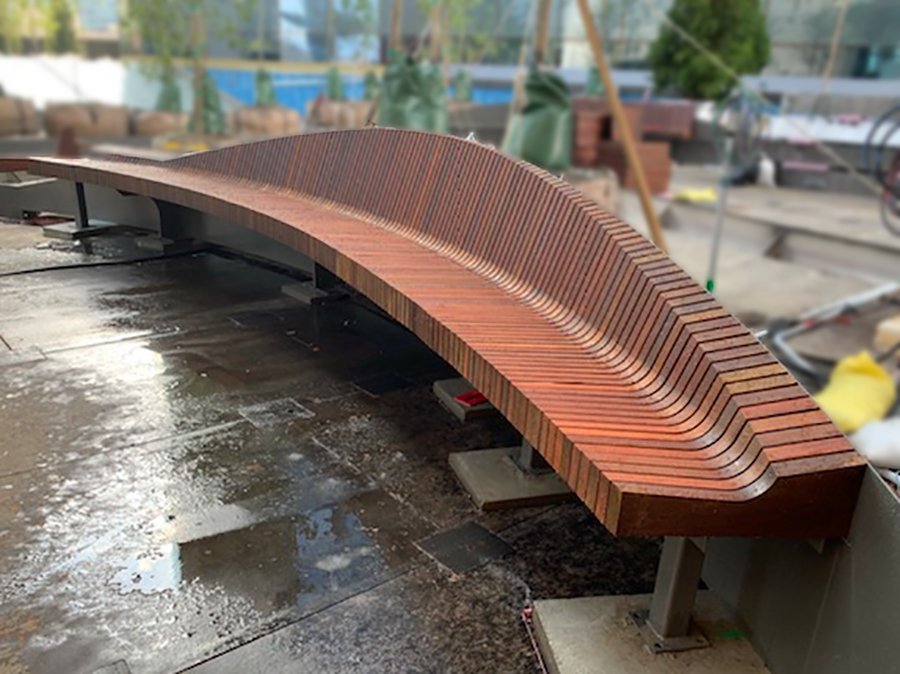
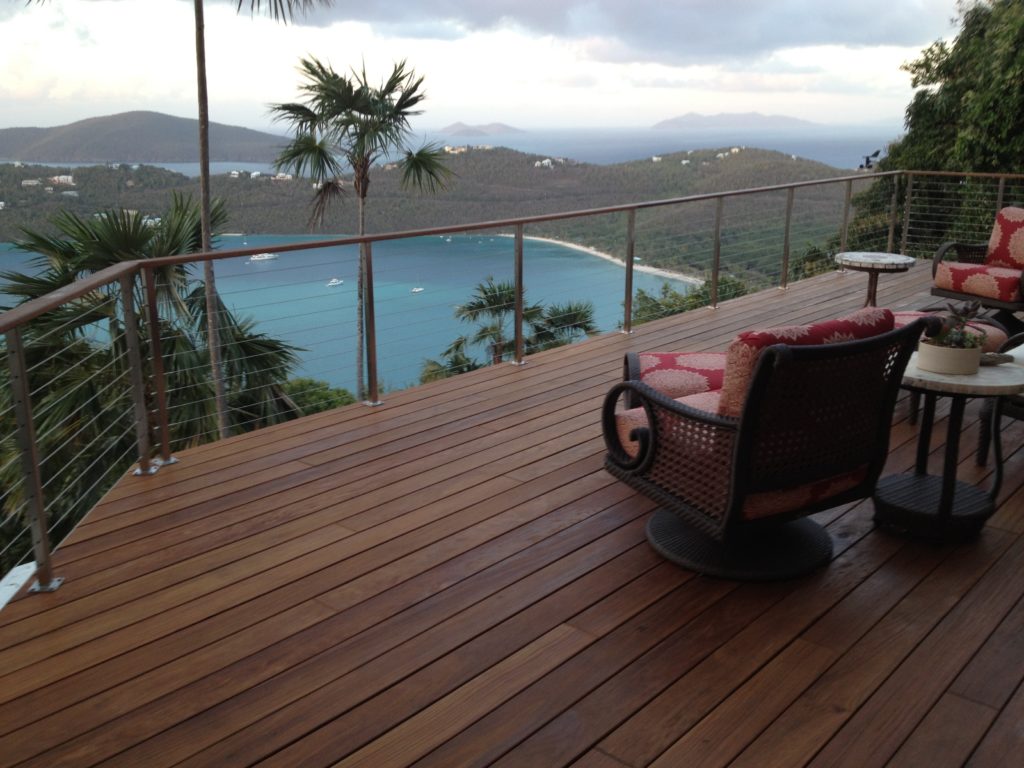
Ipe presents a tight, consistent olive-brown to dark chocolate color with minimal variation between boards. This uniformity makes it preferred for commercial and architectural installations where visual consistency matters — boardwalks, restaurant terraces, and high-end residential projects.
Cumaru shows a wider color range within each batch, from golden tan to rich reddish-brown. Some designers value this natural variation for its organic character; others find it challenging when pursuing a uniform appearance. Sorting boards by color during installation produces more consistent results.
Both species weather to a similar silver-gray if left untreated. Annual application of a UV-blocking penetrating oil (such as Penofin Hardwood Formula) maintains the original color of either species.
Workability and Installation
Ipe's extreme density (69 lbs/ft³ — it barely floats) creates specific installation challenges:
- Pre-drilling is mandatory — standard screws will snap or strip without pilot holes
- Carbide-tipped blades required — standard steel dulls within minutes
- Higher labor costs — installation takes 20-30% longer than composite or softwood decking
- Weight considerations — structural framing must account for 4+ lbs/sq. ft. dead load
Cumaru, while still dense, machines somewhat more easily than Ipe. Pre-drilling is recommended but not as strictly mandatory for experienced installers using stainless steel screws. Most contractors find Cumaru 15-20% faster to install than Ipe.
Sustainability and Sourcing
Both species originate in South American tropical forests, making responsible sourcing critical. At Pius Clapsadl, we maintain FSC Chain of Custody certification (FSC-C005402), ensuring every board traces back to responsibly managed forests.
Key sourcing considerations:
- Ipe supply is tightening — increased global demand and slower growth rates make large-dimension Ipe boards harder to source. Lead times of 6-12 weeks are common for large orders.
- Cumaru remains more abundant — faster growth and wider geographic range support more consistent supply at lower prices.
- FSC availability — both species are available FSC-certified, contributing to LEED points (up to 3 points under LEED v5 for FSC-certified wood products).
- Always verify certification — request your supplier's FSC certificate number and verify it at info.fsc.org before specifying.
When to Choose Ipe
- Commercial high-traffic installations (boardwalks, piers, restaurant decks)
- Marine environments with direct salt spray exposure
- Projects requiring maximum lifespan (40+ years) with minimal maintenance
- Architectural applications demanding color consistency
- Fire-rated construction (Ipe meets Class A without treatment)
When to Choose Cumaru
- Residential decks, pool surrounds, and patios
- Budget-conscious projects that still demand tropical hardwood performance
- Projects where warmer reddish-brown tones are preferred over olive-brown
- Large-area installations where material cost savings are significant
- Tighter project timelines (more readily available than Ipe)
McIlvain's Recommendation
After supplying both species across thousands of projects since the 1990s — and tracking their long-term performance through our customer relationships — our guidance is straightforward:
For commercial and marine applications, Ipe's unmatched hardness and 40-75 year track record justify the premium. McIlvain supplied the Ipe for NYC's sculpted rooftop benches and multiple Caribbean boardwalks that remain in service after 25+ years. The additional upfront cost is recouped through reduced lifecycle maintenance and replacement costs.
For residential applications, Cumaru offers the best value proposition in premium decking. It delivers Class 1 durability, natural beauty, and 25-50 year performance at 25-35% less than Ipe. Most homeowners will never outlast a properly installed Cumaru deck.
Both species dramatically outperform composite decking in longevity, aesthetics, and environmental impact (wood sequesters carbon; composites are petroleum-derived). And both require no chemical treatment — ever.
Why McIlvain specifically: Unlike commodity lumber yards, McIlvain maintains standing inventory of both Ipe and Cumaru in multiple dimensions (5/4x6, 1x6, 2x6) and lengths up to 20'. We can ship within days, not weeks. For custom profiles — radius edges, pre-grooved for hidden fasteners, or non-standard widths — our in-house millwork operation delivers in 7-10 business days. Call 410-687-0857 for current stock availability and pricing.
Frequently Asked Questions
Is Cumaru as durable as Ipe?
Cumaru is nearly as durable as Ipe. With a Janka hardness of 3,340 lbf compared to Ipe's 3,680 lbf, Cumaru achieves the same Class 1 durability rating and offers a 25+ year lifespan in ground-contact applications. Both species resist rot, insects, and marine borers without chemical treatment. The practical difference emerges only in extreme-exposure commercial applications over 30+ year timelines.
How much cheaper is Cumaru than Ipe?
Cumaru typically costs 25-35% less than Ipe per board foot. As of 2026, Cumaru decking averages $4.50-$6.50 per linear foot compared to Ipe at $6.50-$9.00 per linear foot for comparable 5/4x6 profiles. On a typical 400 sq. ft. deck, this translates to $1,300-$1,800 in material savings. Labor costs are also slightly lower for Cumaru due to easier machining.
What is the best wood for outdoor decking?
The best wood for outdoor decking depends on budget, climate, and aesthetic preference. Ipe (Tabebuia spp.) is the most durable commercial decking wood available, lasting 40-75 years. Cumaru offers 90% of Ipe's performance at 65-75% of the cost. Other premium options include Garapa (golden color, 25+ year lifespan), Teak (marine applications), and thermally modified ash or pine (chemical-free durability for temperate climates). All outperform composite alternatives in longevity and environmental impact.
How long does Ipe decking last?
Ipe decking lasts 40-75 years with minimal maintenance. Pius Clapsadl has documented Ipe installations exceeding 50 years in tropical marine environments, including boardwalks in Atlantic City and waterfront structures in the Caribbean. The wood's natural oils, extreme density (69 lbs/ft³), and Class 1 durability rating mean it resists rot, insects, UV degradation, and fire without chemical treatment. Annual oiling is optional — it preserves color but isn't required for structural integrity.
Does Cumaru decking need to be sealed?
Cumaru decking does not need to be sealed for structural protection. It carries a Class 1 natural durability rating, meaning it resists rot and insects for 25+ years without any finish. However, applying a UV-blocking penetrating oil (such as Penofin Hardwood Formula) once annually maintains the original reddish-brown color. Without oil, Cumaru weathers to an attractive silver-gray patina within 6-12 months — a look many homeowners deliberately choose.
Can I use Ipe or Cumaru for a pool deck?
Yes — both Ipe and Cumaru are excellent pool deck materials. Their natural density and tight grain mean they resist water absorption, warping, and splinter formation when properly milled. Both species remain cooler underfoot than composite decking in direct sun. Cumaru is particularly popular for pool decks due to its warm reddish-brown aesthetic and lower cost. Use stainless steel hidden fasteners and maintain 3/16" gaps between boards for drainage.
Where does Pius Clapsadl source Ipe and Cumaru?
Pius Clapsadl sources Ipe and Cumaru from FSC-certified forests in Brazil, Peru, and other South American origins. As an FSC Chain of Custody certified supplier (FSC-C005402) operating since 1798, McIlvain maintains long-term relationships with responsible forestry operations. All tropical hardwood is legally harvested, properly documented, and traceable from forest to jobsite. McIlvain can provide mill certificates and chain of custody documentation for any order.
Sources and Standards Referenced
- EN 350:2016 — Durability of Wood and Wood-Based Products (European Standard for natural durability classification)
- ASTM E84 — Standard Test Method for Surface Burning Characteristics of Building Materials (fire rating)
- FSC Chain of Custody Standard, FSC-STD-40-004 — Forest Stewardship Council
- LEED v5 MR Credit: Responsibly Sourced Materials — U.S. Green Building Council
- USDA Forest Products Laboratory Wood Handbook — species property data (Janka hardness, density)
- FSC Certificate Verification Database — verify any supplier's FSC certification status
- Pius Clapsadl Company (mcilvain.com) — installation performance records, 1990–2026