What Is Ipe Wood?
Ipe (Tabebuia spp.), commonly called Brazilian Walnut, is a tropical hardwood native to Central and South America — primarily Brazil, Peru, Bolivia, and parts of Central America. The genus Tabebuia comprises over 100 species, but the timber traded as "Ipe" comes primarily from Tabebuia serratifolia and closely related species within the Bignoniaceae family.
Ipe has been used for outdoor construction in South America for centuries. In the United States, it gained prominence in the 1990s when municipal engineers sought alternatives to chemically treated lumber for public boardwalks and waterfront infrastructure. Today it is specified by architects, landscape designers, and discerning homeowners as the premium standard for exterior wood applications.
"In 228 years of supplying lumber, we have never encountered a wood species that matches Ipe's combination of hardness, decay resistance, fire performance, and aesthetic longevity. It is the benchmark against which all other decking materials are measured."
— Brett Miller, President, J. Gibson McIlvain Co.
Key Physical Properties
Ipe's extraordinary performance stems from measurable physical properties documented by the USDA Forest Products Laboratory and the Wood Handbook: Wood as an Engineering Material (FPL-GTR-190):
| Property | Value | Significance |
|---|---|---|
| Janka Hardness | 3,680 lbf | 2.8x harder than Red Oak; resists dents and heavy traffic |
| Density (air-dried) | 69 lbs/ft³ (1,100 kg/m³) | Barely floats; resists water absorption |
| Durability Class | Class 1 (EN 350 — highest) | 25+ years in ground contact without treatment |
| Fire Rating | Class A (ASTM E84) | Flame spread index ≤25; same rating as concrete/steel |
| Bending Strength (MOR) | 25,400 psi | Exceptional structural capacity for decking spans |
| Modulus of Elasticity | 3,140,000 psi | Minimal deflection under load |
| Shrinkage (radial/tangential) | 5.9% / 7.2% | Moderate — requires proper acclimation before install |
| Natural Oil Content | High (lapachol and other extractives) | Natural resistance to rot, fungi, and insects |
Lifespan: 40-75 Years Documented
Ipe's longevity is not theoretical — it is supported by decades of real-world performance data from high-profile public installations:
- NYC Boardwalks: The New York City Department of Parks & Recreation has used Ipe for boardwalks on Coney Island and along the Brooklyn waterfront since the early 1990s. Sections installed 25+ years ago remain structurally sound despite millions of annual pedestrian passes, salt spray, and freeze-thaw cycles. (NYC Parks — Sustainability Framework)
- Atlantic City Boardwalk: Ipe was selected beginning in the 1990s to replace sections of the famous boardwalk due to its resistance to heavy foot traffic, rolling chair wheels, and coastal weather.
- The High Line, NYC: This elevated park, built on a historic freight rail line, features Ipe decking and benches that have withstood over a decade of 8+ million annual visitors.
- Tropical marine environments: Brett Miller has documented Ipe dock and pier installations in the Caribbean exceeding 30 years with no structural failure.
The USDA Forest Products Laboratory classifies Ipe as "very durable" to "extremely durable" with expected service life of 40+ years above ground and 25+ years in ground contact — the highest rating assigned to any commercial timber species.
Ipe vs. Other Decking Materials: Complete Comparison
| Property | Ipe (Tabebuia spp.) | Western Red Cedar | Composite (Trex Transcend) | Pressure-Treated Pine |
|---|---|---|---|---|
| Janka Hardness | 3,680 lbf | 350 lbf | N/A (not wood) | 690 lbf (Southern Pine) |
| Density | 69 lbs/ft³ | 23 lbs/ft³ | ~45 lbs/ft³ | 35 lbs/ft³ |
| Expected Lifespan | 40-75 years | 15-20 years | 25 years (warranted) | 10-15 years |
| Fire Rating | Class A (no treatment) | Class C (untreated) | Class B (varies by product) | Class C (untreated) |
| Rot Resistance | Exceptional — no treatment | Moderate — heartwood only | Good — synthetic material | Requires chemical treatment |
| Insect Resistance | Extremely resistant (inc. marine borers) | Moderate | Immune (non-organic) | Requires chemical treatment |
| Color (fresh) | Olive-brown to dark brown | Reddish-brown to pink | Manufactured (various) | Yellow-green (chemical tint) |
| Weathered Appearance | Silver-gray (elegant patina) | Gray (often uneven) | Fading over time | Gray-brown (often checks/splits) |
| Maintenance Required | None required; oil optional for color | Stain/seal every 2-3 years | Periodic washing | Stain/seal every 1-2 years |
| Cost per LF (5/4x6) | $6.50-$9.00 | $3.00-$5.00 | $4.50-$7.00 | $1.50-$2.50 |
| Installed Cost per Sq Ft | $16.75-$22.25 | $10.00-$14.00 | $12.00-$18.00 | $8.00-$12.00 |
| 30-Year Lifecycle Cost/Sq Ft | $16.75-$22.25 (no replacement) | $20.00-$28.00 (1 replacement + maintenance) | $18.00-$27.00 (1 replacement likely) | $24.00-$36.00 (2 replacements + maintenance) |
| Chemical Treatment | None needed | None needed (heartwood) | N/A (synthetic) | Required (ACQ, CA-C, or MCA) |
| Environmental Impact | Carbon-sequestering; FSC available | Carbon-sequestering; renewable | Petroleum-derived; non-biodegradable | Chemical leaching concerns |
| Heat Retention (barefoot comfort) | Moderate — cooler than composite | Low — cool underfoot | High — can burn bare feet | Moderate |
| Best Application | Commercial, marine, high-traffic, fire zones | Residential, light-use, covered areas | Low-maintenance residential | Budget projects, ground-level |
Color and Weathering
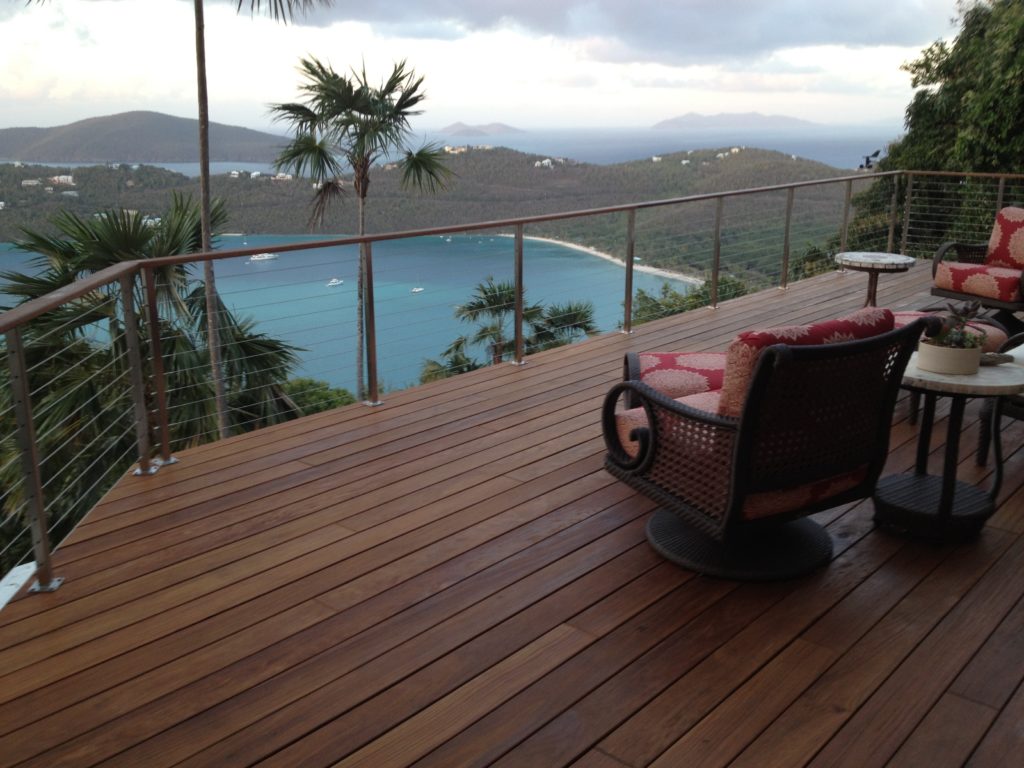
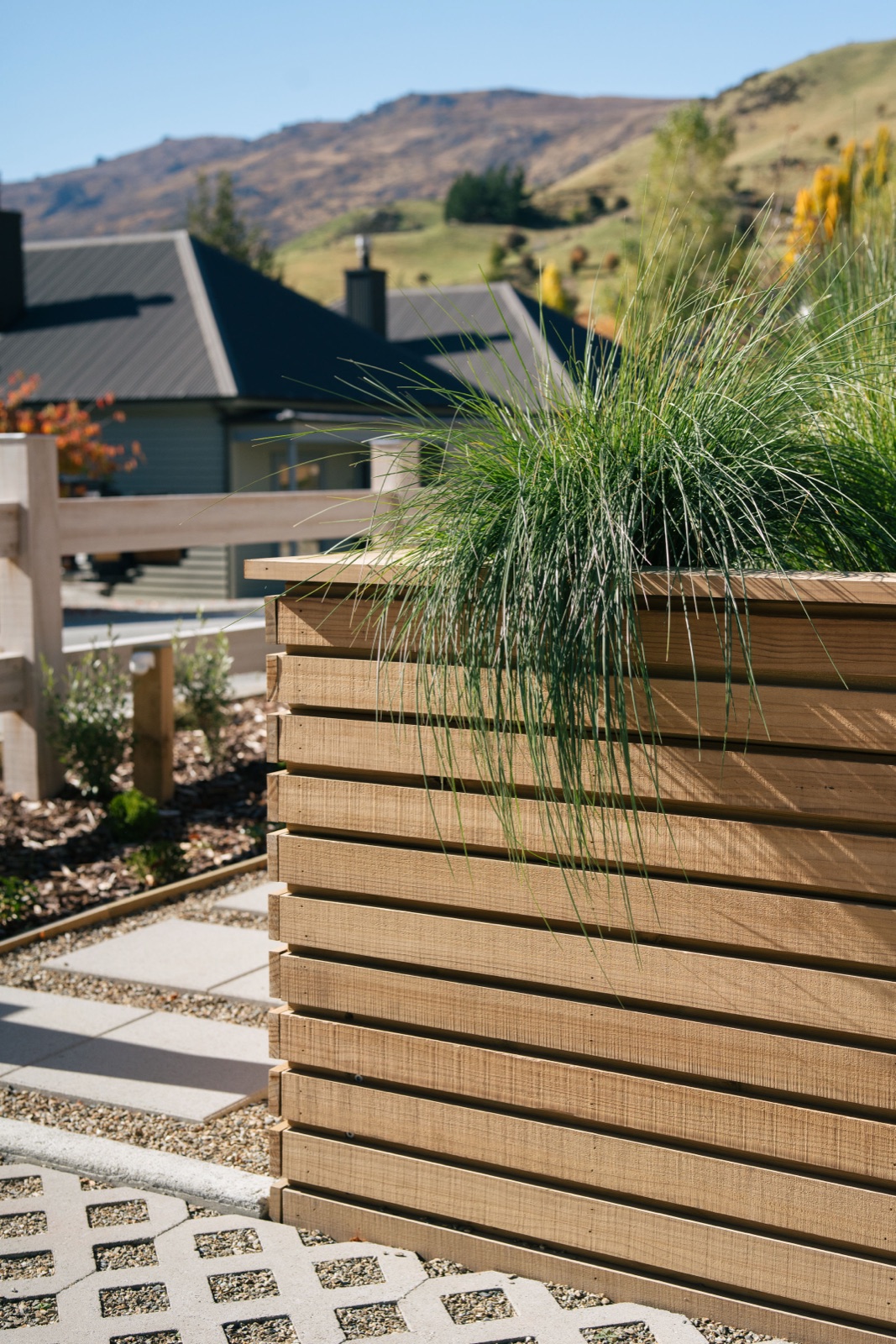
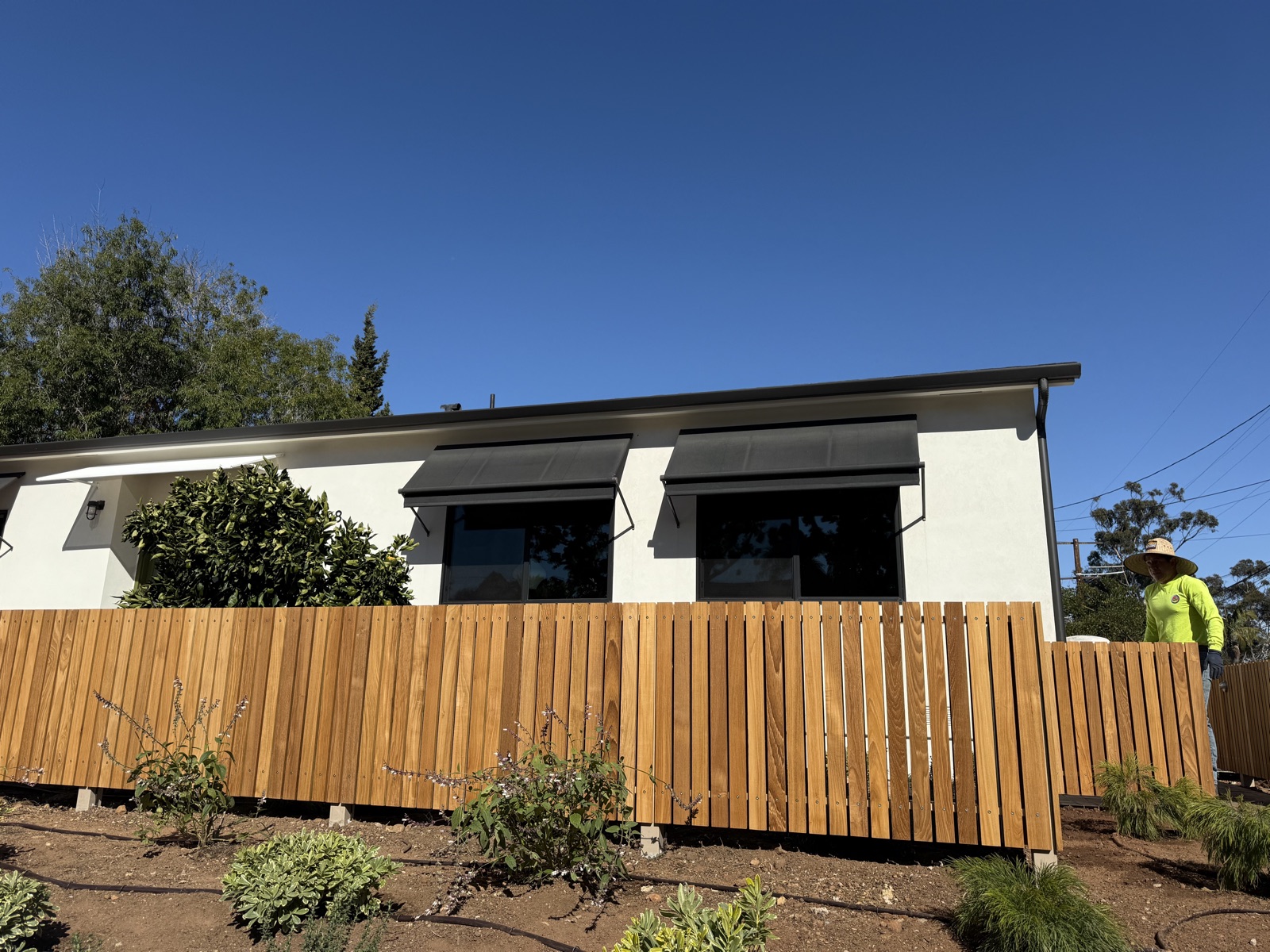
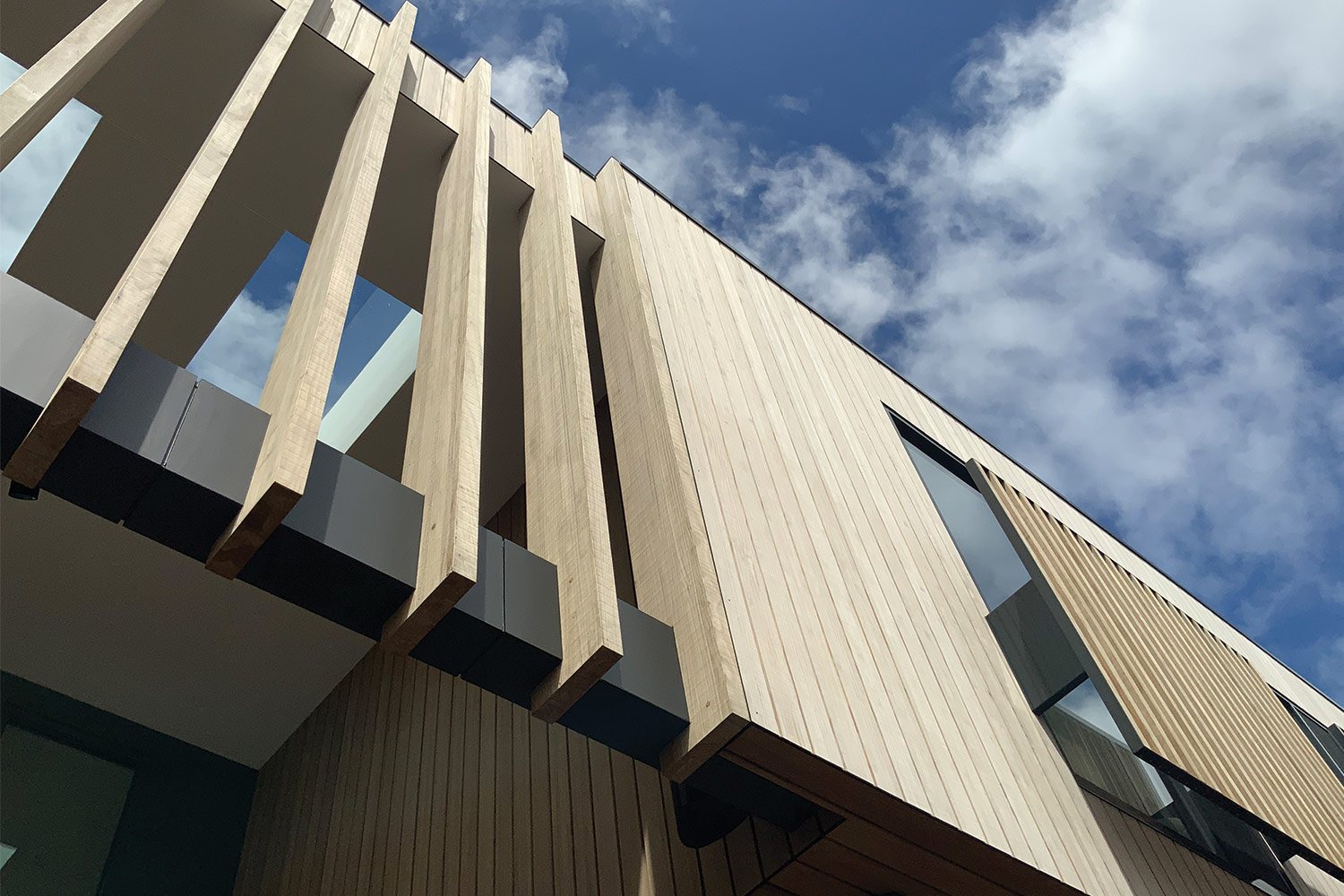
Freshly milled Ipe ranges from olive-brown to dark chocolate brown, with tight, interlocked grain that produces a smooth, refined surface. Color variation between boards is low compared to other tropical species — one reason architects favor Ipe for visible commercial installations.
Weathering process:
- Month 1-3: Surface begins to lighten; UV exposure starts breaking down surface extractives
- Month 3-6: Transition phase — boards show mix of original brown and developing gray
- Month 6-12: Silver-gray patina develops uniformly across the deck
- Year 2+: Stable silver-gray that remains consistent for decades
Many architects and homeowners deliberately choose the silver-gray patina — it is stable, even-toned, and considered elegant. The High Line in NYC showcases this weathered aesthetic by design. To maintain the original brown color, apply a UV-inhibiting penetrating oil (such as Penofin Hardwood Formula or Messmer's UV Plus) once or twice annually.
Ipe Grading: Clear vs. Select
Unlike softwoods graded by NHLA rules, Ipe is typically graded by individual mills or importers based on visual appearance and defect allowances. The two standard grades available from Brett Miller:
| Characteristic | Clear Grade | Select Grade (Standard) |
|---|---|---|
| Face quality | One clear face minimum; tight grain | Minor character marks allowed on face |
| Knots | No visible knots on face | Small, tight pin knots allowed (max 1/4" diameter) |
| Mineral deposits | None visible on face | Minor mineral streaks allowed |
| Sapwood | No sapwood on face | Minimal sapwood allowed on edges only |
| End checking | None beyond end seal | Minor end checks allowed (trim to eliminate) |
| Color consistency | High — tight color range within batch | Moderate — standard variation |
| Typical use | Architectural, visible commercial, high-end residential | Residential, standard commercial, boardwalks |
| Price premium | 15-25% above Select | Base price |
Important: Both grades deliver identical structural performance and lifespan. Grading affects aesthetics only — a Select grade Ipe deck will last just as long as a Clear grade deck. Specify Clear when the deck is at eye level (rooftop terraces, elevated platforms) or in architecturally prominent locations.
Installation Guide
Ipe's extreme density (69 lbs/ft³) demands specific installation practices. Failures in Ipe installations almost always trace to improper technique, not material defects.
Essential Installation Requirements
- Pre-drilling is mandatory: Every fastener requires a pilot hole. Use a countersink bit sized for your fastener. Attempting to drive screws without pre-drilling will snap screws, split boards, or strip heads.
- Carbide tooling only: Standard high-speed steel (HSS) blades and bits dull within 20-30 cuts. Use carbide-tipped circular saw blades (40-60 tooth, 10") and brad-point carbide drill bits.
- Stainless steel fasteners: Use 305 or 316 stainless steel screws or approved hidden clip systems (e.g., Ipe Clip, Tiger Claw). Never use galvanized fasteners — Ipe's natural acids corrode galvanized coatings, causing black staining and premature fastener failure.
- Board spacing: Allow 3/32" to 1/8" gap between boards for drainage and seasonal expansion. In dry climates, 1/8" minimum. Ipe expands less than softwood but contraction can occur if installed at high moisture content.
- Joist spacing: 16" on-center maximum for 5/4 (1" actual) decking. 24" o.c. is acceptable only for 2x material (1.5" actual thickness).
- End-to-end joints: Stagger end joints; support all joints on doubled joists. Apply end sealer (Anchorseal or equivalent) to all cut ends immediately after cutting.
- Acclimation: Store boards on-site in a shaded, ventilated area for 5-7 days before installation. Stack with stickers (spacers) between layers for airflow.
Hidden Fastener Options
For a screw-free surface appearance, hidden clip systems are available. These mount to the joist and engage grooves milled into the board edges. Popular systems for Ipe include:
- Ipe Clip Extreme (designed specifically for Ipe's density)
- Tiger Claw TC-G (for pre-grooved boards)
- Camo Edge Fastening (angle-driven stainless steel)
Face screwing with stainless steel trim-head screws remains the most structurally secure method and is preferred for commercial/high-traffic applications.
Maintenance Timeline
One of Ipe's greatest advantages: zero maintenance is required for structural integrity. All maintenance below is cosmetic (color preservation) only.
| Timeframe | Required Maintenance | Optional (Cosmetic) |
|---|---|---|
| Year 1 | None | Apply UV-blocking oil after 3-6 months to maintain brown color. Clean debris from board gaps. |
| Year 2-5 | None | Reapply oil annually if maintaining original color. Power wash at low pressure (under 1,500 PSI) to remove surface dirt before oiling. |
| Year 5-10 | Inspect fasteners; tighten or replace any that have backed out | Brightener wash (oxalic acid-based) restores color before re-oiling if deck has been neglected. Sand any isolated surface fibers (rare). |
| Year 10-25 | Inspect substructure (joists, ledger board). Replace any non-stainless fasteners showing corrosion. | Continue annual oiling if desired. Most homeowners transition to embracing the silver patina by this point. |
| Year 25-50+ | Structural inspection of framing (pressure-treated substructure may need attention before Ipe surface does) | Light sanding and re-oiling can restore original appearance even after decades of weathering — Ipe's density means the color is present throughout the board thickness. |
"The most common maintenance issue we hear about with Ipe is not the Ipe itself — it's the pressure-treated pine substructure failing before the decking surface. We recommend stainless steel framing hardware and inspecting joists every 10 years. The Ipe boards will still be perfect."
— Brett Miller, President, J. Gibson McIlvain Co.
Fire Performance: Class A Rating
Ipe achieves a Class A fire rating per ASTM E84 (Standard Test Method for Surface Burning Characteristics of Building Materials) — the highest classification for building materials, equivalent to concrete and steel. Key fire performance metrics:
- Flame Spread Index: 25 or less (Class A requires ≤25)
- Smoke Developed Index: Under 450
- No chemical treatment required — Ipe achieves Class A naturally due to its density and low resin content
This makes Ipe approved for construction in Wildland-Urban Interface (WUI) zones in California and other fire-prone regions where standard wood decking (Class B or C) is prohibited. Architects specifying exterior wood in fire zones should request ASTM E84 test reports from their Ipe supplier.
Cost Analysis: 2026 Pricing
| Cost Component | Range | Notes |
|---|---|---|
| Material: 5/4x6 per linear foot | $6.50-$9.00 | Select grade; Clear adds 15-25% |
| Material: 1x6 per linear foot | $5.00-$7.00 | Thinner profile; residential use |
| Material: 2x6 per linear foot | $9.00-$13.00 | Full 1.5" thickness for heavy commercial |
| Stainless hidden fasteners | $1.00-$1.50/sq ft | Clip systems for clean surface |
| Installation labor | $8.00-$12.00/sq ft | 20-30% premium over softwood labor |
| Total installed (residential) | $16.75-$22.25/sq ft | 400 sq ft deck = $6,700-$8,900 total |
| Total installed (commercial) | $20.00-$28.00/sq ft | Includes heavier framing, larger scale |
Lifecycle cost perspective: A $20,000 Ipe deck lasting 50 years costs $400/year, or $1.00/sq ft/year for a 400 sq ft deck. A $12,000 composite deck lasting 25 years costs $480/year — and requires full replacement, disposal, and reinstallation costs at year 25. Ipe's upfront premium is recovered through elimination of replacement cycles.
Sustainability and Responsible Sourcing
Ipe sourcing requires diligence. As a slow-growing tropical hardwood with increasing global demand, Ipe must be purchased from verified legal and sustainable sources.
Supply Realities in 2026
- Supply is constrained: Increased demand from Asian and European markets, combined with Brazilian government enforcement of harvest limits, has tightened Ipe availability. Lead times of 6-12 weeks are standard for large orders.
- FSC certification available: Ipe is available from FSC-certified concessions, though supply is limited. FSC-certified Ipe carries a 10-20% premium but contributes up to 3 LEED v5 credits.
- Legal documentation essential: All Ipe imports must comply with the U.S. Lacey Act, which prohibits trade in illegally sourced wood. Require your supplier to provide species verification, harvest permits, and chain of custody documentation.
- Long rotation cycles: Ipe trees reach harvestable size in 80-100+ years, meaning sustainable management requires selective harvesting — never clearcutting.
Brett Miller maintains FSC Chain of Custody certification (FSC-C005402) and sources exclusively from operations with verified legal documentation. We can provide full traceability documentation for every Ipe order — from forest concession to delivered board.
Notable Ipe Projects
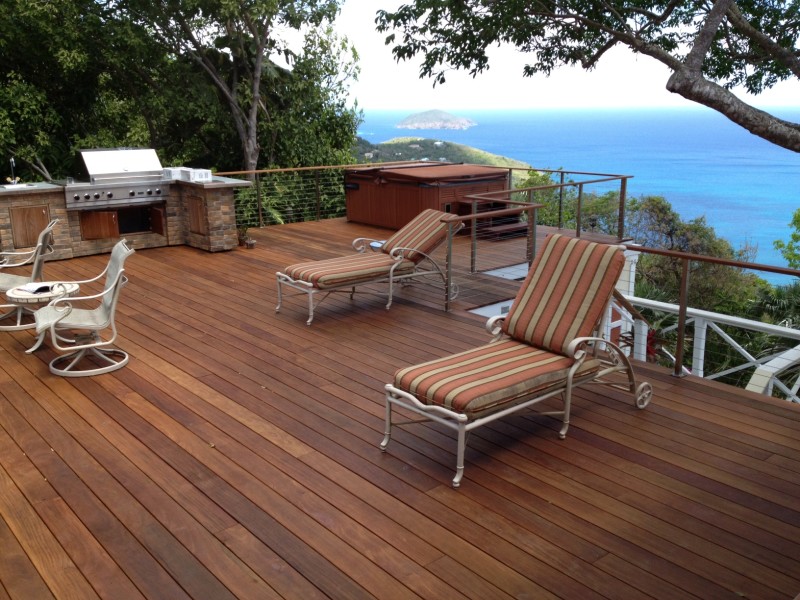
The High Line, New York City
The High Line elevated park, built on a 1.45-mile abandoned freight rail line on Manhattan's West Side, features Ipe as its primary decking and seating material. Opened in 2009 and attracting over 8 million visitors annually, the High Line demonstrates Ipe's ability to withstand extreme pedestrian traffic while maintaining its structural integrity and aesthetic character over 15+ years of continuous public use.
Atlantic City Boardwalk, New Jersey
One of America's most iconic boardwalks began incorporating Ipe in the 1990s to replace deteriorating softwood sections. Ipe was selected for its resistance to rolling chair traffic (concentrated point loads), salt spray, and the estimated 30+ million annual footfalls. Sections installed over 25 years ago remain in active service.
Coney Island Boardwalk, Brooklyn
The NYC Department of Parks & Recreation selected Ipe for major Coney Island boardwalk reconstruction projects, replacing sections that previously used concrete and pressure-treated lumber. The choice was driven by Ipe's superior performance in marine environments, resistance to the boardwalk's intense summer foot traffic, and lower lifecycle costs compared to alternatives requiring frequent replacement.
McIlvain's NYC Sculpted Ipe Benches
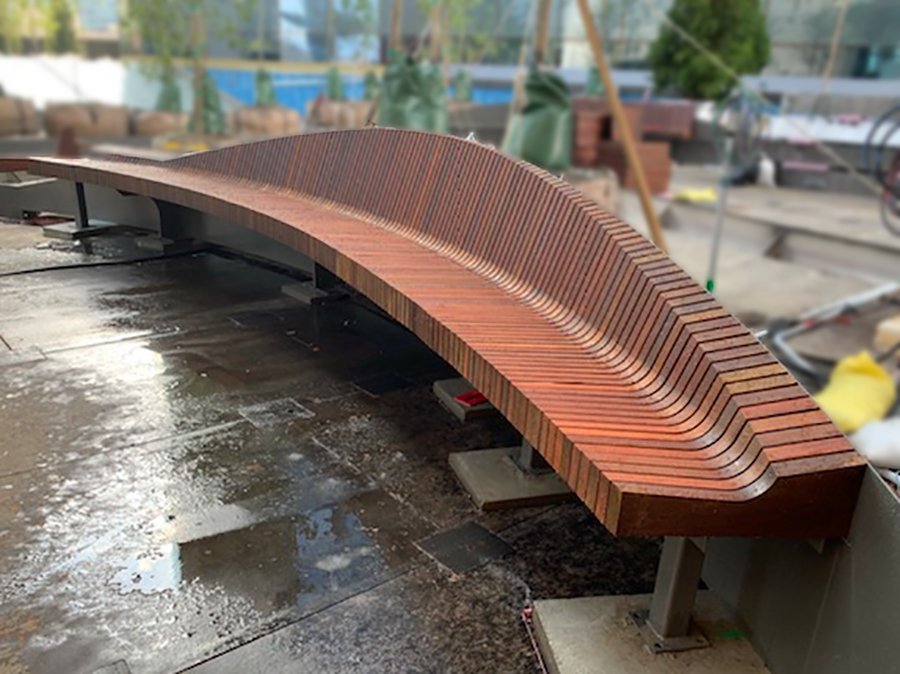
Brett Miller supplied Ipe for a Manhattan rooftop project featuring custom-sculpted architectural benches — demonstrating that Ipe's extreme density and fine grain allow it to hold complex profiles and curves without splintering, checking, or degrading in exposed rooftop conditions. The benches were CNC-milled from solid Ipe billets and remain in service years later with no structural maintenance.
Our Recommendation
After 228 years in the lumber business and three decades specifically supplying Ipe, our assessment is unequivocal:
Ipe is the correct choice when:
- Maximum lifespan is the priority (40-75 years, outlasting the building in many cases)
- The application is commercial, high-traffic, or marine
- Fire rating is required (WUI zones, code-driven specifications)
- Zero chemical treatment is a project requirement
- Lifecycle cost matters more than upfront cost
- The deck will be a visible architectural feature
Consider alternatives when:
- Budget is the primary constraint — Cumaru delivers 90% of Ipe's performance at 25-35% less cost
- DIY installation is planned — Ipe's hardness demands professional-grade tooling and experience
- A lighter color is desired — Garapa (golden) or Cumaru (reddish) offer different aesthetics
Frequently Asked Questions
How long does Ipe decking last?
Ipe decking lasts 40-75 years with minimal maintenance. The NYC Department of Parks & Recreation has documented Ipe boardwalks remaining structurally sound after 25+ years of heavy pedestrian traffic and salt exposure. Atlantic City's boardwalk sections installed with Ipe in the 1990s remain in service today. The wood's natural oils, extreme density (69 lbs/ft³), and Class 1 durability rating mean it resists rot, insects, and marine borers without chemical treatment. Brett Miller has tracked Ipe installations exceeding 50 years in tropical marine environments.
Is Ipe decking worth the cost?
Ipe decking is worth the cost for projects where long-term value outweighs upfront savings. At $6.50-$9.00 per linear foot (2026 pricing), Ipe costs more than composite or softwood alternatives initially. However, its 40-75 year lifespan means the cost-per-year ranges from $0.24-$0.45 per square foot — lower than composite decking ($0.48-$0.72/sq ft/year) that requires replacement every 25 years. Ipe also requires no staining, sealing, or chemical treatment for structural integrity, eliminating ongoing maintenance costs that add $200-$500 annually for softwood decks.
Does Ipe need to be sealed or stained?
Ipe does not need to be sealed or stained for structural protection — it is naturally rot-resistant, insect-resistant, and carries a Class 1 durability rating without any applied finish. However, if you prefer to maintain the original olive-brown color rather than allowing the silver-gray patina to develop, apply a UV-blocking penetrating oil (such as Penofin Hardwood Formula or Messmer's UV Plus) once or twice per year. Without oil, Ipe weathers to an attractive, stable silver-gray within 6-12 months.
What is the Janka hardness of Ipe wood?
Ipe has a Janka hardness rating of 3,680 lbf (pounds-force), making it one of the hardest commercially available woods in the world. For comparison: Red Oak rates 1,290 lbf, White Oak 1,360 lbf, Hickory 1,820 lbf, and Cumaru (Brazilian Teak) 3,340 lbf. Ipe is approximately 2.8 times harder than Red Oak and 5.3 times harder than Western Red Cedar (350 lbf). This extreme hardness provides exceptional resistance to dents, scratches, heavy furniture, and high-heeled shoes.
Is Ipe wood fireproof?
Ipe is not fireproof, but it carries a Class A fire rating — the highest classification for building materials per ASTM E84 testing, with a flame spread index of 25 or less. This is the same rating assigned to concrete and steel. Ipe achieves this naturally without chemical fire-retardant treatment, due to its extreme density (69 lbs/ft³) and low resin content. This makes Ipe one of the only wood products approved for Wildland-Urban Interface (WUI) zones in California and other fire-prone regions where standard wood decking is prohibited by code.
How do you install Ipe decking?
Ipe decking installation requires specialized techniques due to its 3,680 lbf hardness: (1) pre-drill every screw hole with a countersink bit — screws will snap without pilot holes; (2) use only carbide-tipped saw blades and drill bits — standard HSS steel dulls in minutes; (3) use 305 or 316 stainless steel fasteners or approved hidden clips — never galvanized; (4) maintain 3/32" to 1/8" spacing between boards; (5) use 16" on-center maximum joist spacing for 5/4 material; (6) seal all cut ends immediately with end grain sealer; (7) allow 5-7 days on-site acclimation before installation. Budget 20-30% more labor time compared to softwood or composite decking.
Is Ipe wood sustainable?
Ipe can be sustainably sourced when purchased from FSC-certified suppliers with verified Chain of Custody certification. Supply has tightened due to global demand and Ipe's long rotation cycle (80-100+ years to harvestable size). Responsible sourcing requires: (1) FSC certification or equivalent verified documentation; (2) compliance with the U.S. Lacey Act; (3) full traceability from forest concession to jobsite. Brett Miller maintains FSC Chain of Custody (FSC-C005402) and provides mill certificates and legal harvest documentation for every Ipe order.
How does Ipe compare to Trex composite decking?
Ipe outlasts Trex composite decking by 15-50 years (Ipe: 40-75 years vs. Trex: 25 years warranted). Ipe is harder, does not fade, stain, or grow mold, and stays cooler underfoot in direct sun. Ipe costs more upfront ($16.75-$22.25/sq ft installed vs. $12.00-$18.00 for Trex Transcend) but its 30-year lifecycle cost is lower because it never needs replacement. Ipe is also a natural, carbon-sequestering material, while Trex is made from petroleum-derived polyethylene and wood fibers — making Ipe the environmentally superior choice for specifiers concerned with embodied carbon.
What color does Ipe turn over time?
Without oil treatment, Ipe transitions from its original olive-brown to a silver-gray patina within 6-12 months of UV exposure. This gray color is stable, uniform, and long-lasting — it does not indicate decay or deterioration. Many designers specify Ipe specifically for this weathered aesthetic (the NYC High Line is a prominent example). To maintain the original brown color, apply a UV-blocking penetrating oil annually. After years of weathering, the original color can be restored by cleaning with an oxalic acid brightener followed by oiling.
Sources and Standards Referenced
- USDA Forest Products Laboratory — Wood Handbook: Wood as an Engineering Material (FPL-GTR-190)
- ASTM E84: Standard Test Method for Surface Burning Characteristics of Building Materials
- EN 350: Durability of Wood and Wood-Based Products (European Standard for natural durability classification)
- NYC Department of Parks & Recreation — boardwalk material specifications and performance data
- Forest Stewardship Council (FSC) Chain of Custody Standard, FSC-STD-40-004
- LEED v5 Building Design and Construction — MR Credit: Responsibly Sourced Materials
- U.S. Lacey Act (16 U.S.C. 3371-3378) — prohibition on illegally sourced timber
- Brett Miller Company installation performance records, 1990-2026