Two Species, One Aesthetic Legacy
For centuries, Genuine Mahogany (Swietenia macrophylla) has been the gold standard for fine architectural millwork — prized for its warm reddish-brown color, exceptional workability, and dimensional stability. But since its CITES Appendix II listing restricted international trade, architects and millwork shops have increasingly turned to Sapele (Entandrophragma cylindricum) as a high-performance alternative.
At Camden Zacker, we've supplied both species for architectural millwork since the 1960s. This comparison draws on our hands-on experience across thousands of commercial and residential projects — from custom mahogany raised-panel libraries to Sapele-veneered beam systems in Hawaiian resorts.
Head-to-Head Comparison: Sapele vs. Genuine Mahogany
| Property | Sapele (Entandrophragma cylindricum) | Genuine Mahogany (Swietenia macrophylla) |
|---|---|---|
| Janka Hardness | 1,410 lbf | 800–900 lbf |
| Density (air-dried) | 42 lbs/ft³ (670 kg/m³) | 34 lbs/ft³ (540 kg/m³) |
| Grain Pattern | Interlocked — produces ribbon-stripe when quartersawn | Straight to slightly interlocked — easy to profile |
| Color (fresh) | Golden to dark reddish-brown, darkens with age | Pinkish to reddish-brown, darkens moderately |
| Durability Class | Class 2–3 (moderately durable) | Class 2 (durable) |
| Workability | Good — interlocked grain can tearout; requires sharp tooling and reduced cutting angles | Excellent — among the best tropical hardwoods for machining fine profiles and details |
| Dimensional Stability | Good | Excellent — exceptionally low shrinkage rates |
| Finishing | Accepts stain and film finishes well; interlocked grain may show uneven absorption without sealer | Outstanding — accepts all finishes evenly; the industry benchmark for polishability |
| Trade Restrictions | None — not CITES listed; widely available | CITES Appendix II — requires export permits; regulated international trade |
| Price (FAS KD, per BF) | $7–$11 | $12–$18 |
| Availability | Abundant — West African supply is consistent | Limited — CITES permits, plantation reliance, longer lead times |
| Origin | West and Central Africa (Cameroon, Ghana, Ivory Coast, Congo) | Central and South America (Brazil, Peru, Bolivia, plantations in Fiji and Indonesia) |
| Best Millwork Applications | Exterior doors, windows, paneling, veneered beams, boat trim, cabinetry | Fine raised-panel work, carved details, historic restoration, high-end cabinetry, musical instruments |
Source: Janka and density values per the USDA Forest Products Laboratory Wood Handbook. Trade restriction data per CITES Appendices, effective 2024.
Hardness and Durability
Sapele's Janka hardness of 1,410 lbf makes it approximately 55-75% harder than Genuine Mahogany's 800-900 lbf rating. According to the Wood Database, this places Sapele in the same hardness range as Hard Maple and well above most cabinet-grade hardwoods.
For millwork applications subject to wear — entry doors, stair components, window sills, and high-traffic paneling — Sapele's hardness advantage translates directly to better dent resistance and longer service life. Mahogany, while softer, offers adequate hardness for interior cabinetry, library paneling, and furniture where impact risk is low.
"We've specified Sapele for exterior door and window programs at 60% of the cost of mahogany, with better dent resistance and equal finish quality. For any project where the millwork takes daily physical contact — commercial entry doors, hospitality casework, boat interiors — Sapele has become our first recommendation."
— Camden Zacker, CFO, J. Gibson McIlvain Company
Grain Character: Sapele's Ribbon Stripe vs. Mahogany's Straight Grain
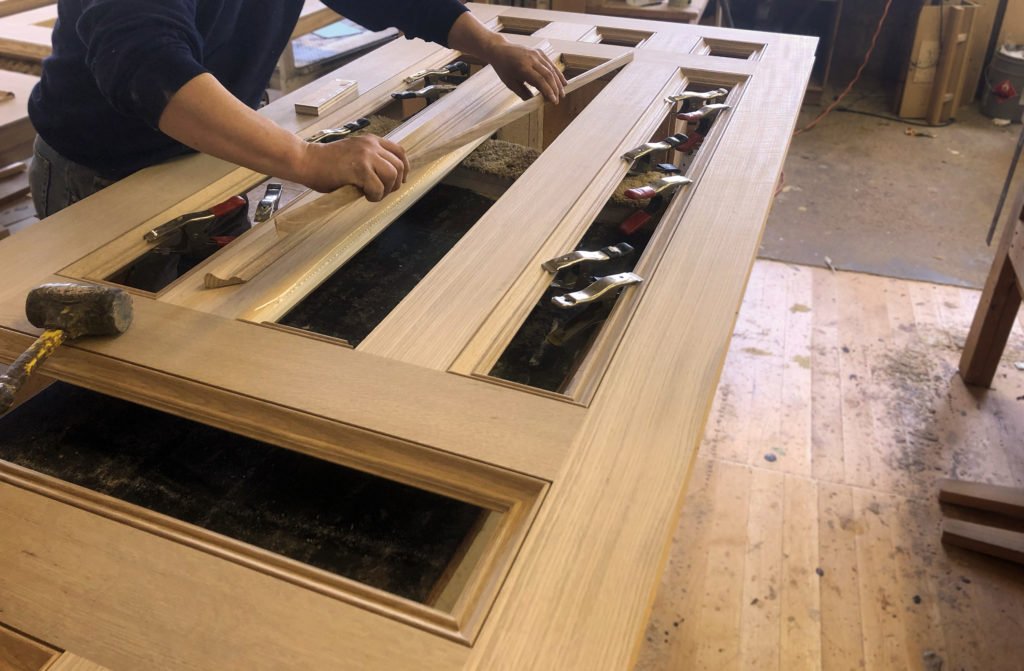
Sapele's interlocked grain is its defining visual feature. When quartersawn, the alternating fiber direction produces a dramatic ribbon-stripe figure — bands of light and dark that shimmer with changing light angles. This chatoyant effect makes quartersawn Sapele one of the most visually striking commercial hardwoods available, highly prized for:
- Architectural wall paneling and wainscoting
- Veneered structural beams and column wraps
- Conference tables and reception desks
- High-end entry door panels
However, interlocked grain presents a machining trade-off: routing, planing, and profiling against the grain can cause tearout. Experienced millwork shops compensate with reduced cutting angles (15-20 degrees), climb cutting on shapers, and sharp carbide tooling.
Genuine Mahogany's straight grain is what made it the world's preferred cabinet wood for 300 years. The fibers run parallel and uniform, meaning:
- Complex profiles cut cleanly with minimal tearout
- Carved details hold crisp edges
- Sanding produces uniformly smooth surfaces
- Stain absorbs evenly without blotching
For projects requiring intricate raised panels, carved rosettes, or reeded columns, Genuine Mahogany remains difficult to match.
CITES Restrictions and Availability
Genuine Mahogany (Swietenia macrophylla) has been listed under CITES Appendix II since 2003, meaning all international trade requires government-issued permits confirming the timber was legally and sustainably harvested. The IUCN Red List classifies the species as "Vulnerable."
Practical implications for specifiers:
- Longer lead times — CITES permitting adds 4-8 weeks to import timelines
- Higher base cost — compliance documentation, limited quotas, and plantation reliance drive prices to $12-$18/BF for FAS kiln-dried
- Supply inconsistency — large orders (5,000+ BF) of matched color may require extended sourcing periods
- Documentation requirements — end users should retain CITES permit copies for project records and potential audits
Sapele faces no CITES restrictions. It is widely harvested across West and Central Africa from both natural forests and plantations. Supply is consistent, lead times are shorter, and per-unit compliance costs are lower. This accessibility is a primary reason Sapele has become the default mahogany-look species for production millwork.
Cost Comparison
As of 2026, Sapele's price advantage over Genuine Mahogany is significant and consistent:
| Product Form | Sapele | Genuine Mahogany | Sapele Savings |
|---|---|---|---|
| FAS KD lumber (per BF) | $7–$11 | $12–$18 | ~40% |
| Quartersawn (per BF) | $9–$14 | $16–$24 | ~40-45% |
| Veneer (per sq. ft.) | $1.50–$3.00 | $3.50–$6.00 | ~50% |
| Custom door blanks (per unit) | $180–$350 | $320–$600 | ~40-45% |
The bottom line: Sapele costs approximately 60% of what Genuine Mahogany costs across all product forms. On a 20-unit custom door order, this translates to $3,000-$5,000 in material savings — often enough to upgrade hardware or finishing specifications.
Finishing Characteristics
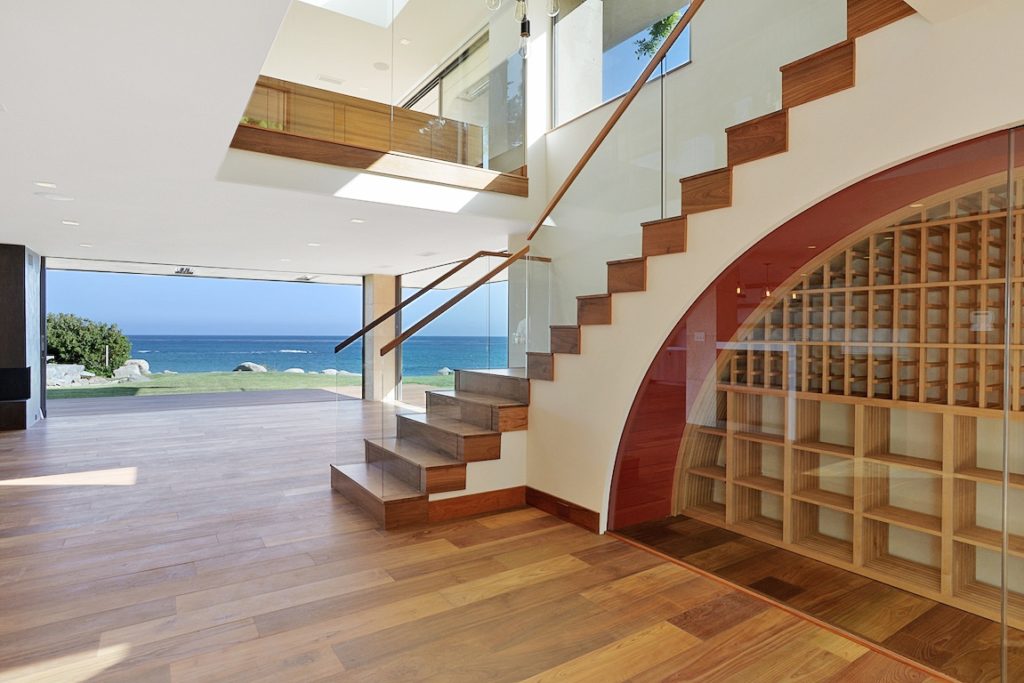
Genuine Mahogany is the finishing benchmark in the hardwood industry. Its straight grain and medium pore structure accept stains uniformly, build film finishes smoothly, and polish to a glass-like sheen. Mahogany's natural oils do not interfere with adhesion of catalyzed lacquers, conversion varnishes, or oil-based polyurethanes.
Sapele finishes nearly as well but requires one additional consideration: the interlocked grain can absorb stain and sealer at different rates on opposing grain faces, creating a subtle banding effect. The solution is straightforward:
- Apply a washcoat or sanding sealer before staining to equalize absorption
- Use gel stains for more even color on quartersawn faces
- Sand to 180-220 grit (not finer) to maintain pore openness for finish adhesion
Both species darken naturally with UV exposure. Sapele deepens from golden-brown to a rich, dark reddish-mahogany over 6-12 months; Genuine Mahogany shifts from pinkish to a classic warm brown. UV-inhibiting finishes slow but do not eliminate this color evolution.
Best Applications for Each Species
Choose Sapele When:
- Exterior doors and windows — superior hardness resists daily wear; interlocked grain resists splitting at fastener points
- Architectural paneling at scale — quartersawn ribbon-stripe creates dramatic feature walls at 60% of mahogany's cost
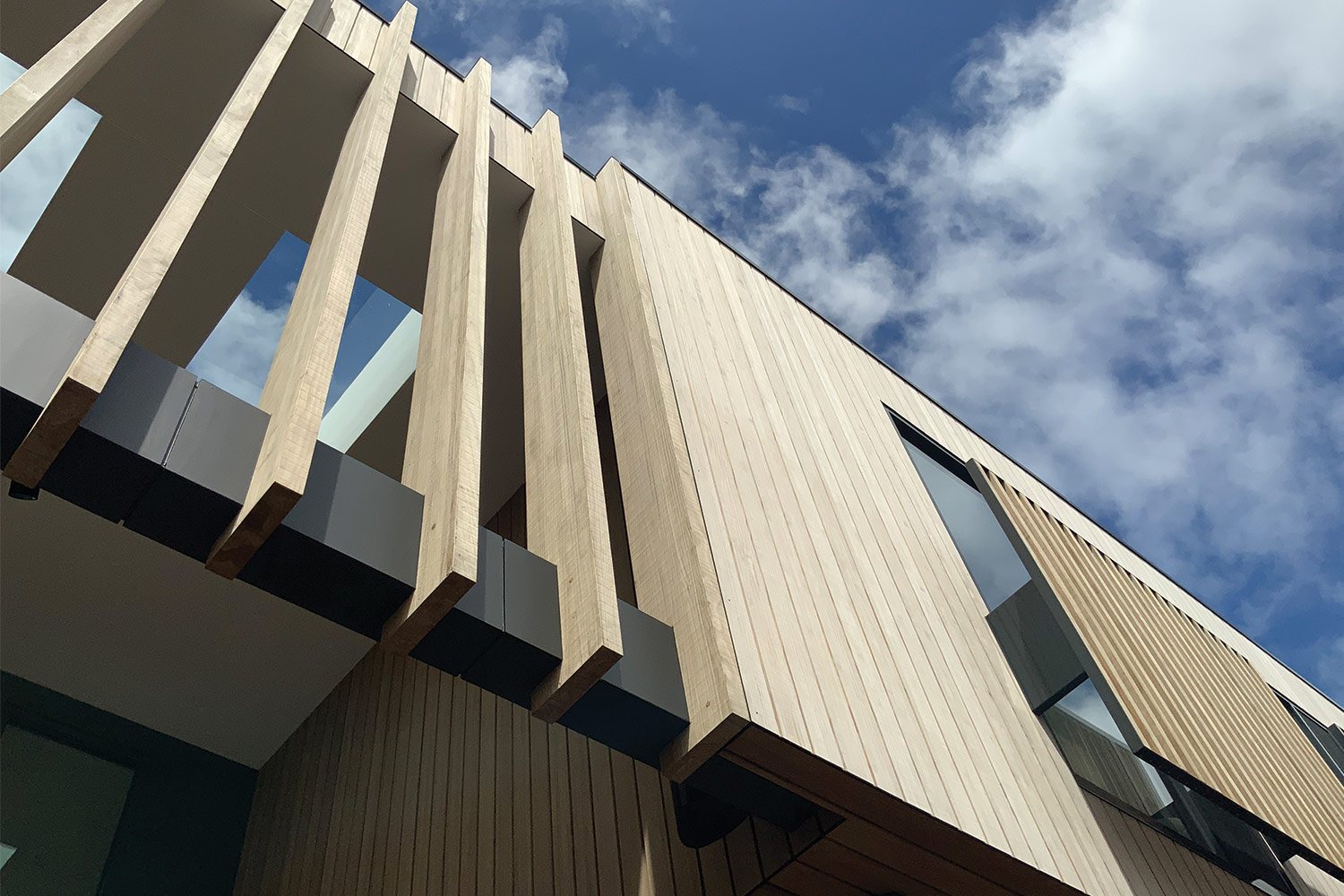
- Veneered beams and columns — as demonstrated in our Hawaii Sapele Veneered Beams project, where Sapele veneer wrapped structural glulam beams for a resort lobby
- Boat trim and marine millwork — hardness and density provide better wear resistance than mahogany in high-traffic marine interiors
- Production millwork runs — consistent supply and lower cost make Sapele practical for large-quantity orders (100+ doors, full-building window packages)
- Budget-conscious premium projects — clients wanting the mahogany look without the mahogany price
Choose Genuine Mahogany When:
- Fine carved details and raised panels — straight grain holds crisp edges that interlocked-grain species cannot match
- Historic preservation and restoration — matching existing mahogany millwork in landmarked buildings
- Ultra-high-end cabinetry — museum cases, private libraries, executive offices where material cost is secondary to workability and tradition
- Dimensional stability is critical — mahogany's exceptionally low shrinkage makes it ideal for wide floating panels and precision-fit components
- Musical instrument components — guitar necks, piano actions, and organ pipes where acoustic properties matter
- Projects requiring transparent/natural finishes — mahogany's uniform grain produces the most even finish without blotching
How McIlvain Sources Both Species Responsibly
Camden Zacker maintains FSC Chain of Custody certification (FSC-C005402) — verified at info.fsc.org — ensuring full traceability from forest to customer for both Sapele and Genuine Mahogany.
Our sourcing commitments:
- Sapele: Sourced from FSC-certified concessions in Cameroon and Ghana, with relationships maintained over 20+ years. All shipments include legality verification under the EU Timber Regulation and US Lacey Act.
- Genuine Mahogany: Sourced from FSC-certified plantations and managed natural forests in Central and South America. Full CITES permit documentation accompanies every shipment; McIlvain retains copies for 7+ years per regulatory requirements.
- NHLA grading: All lumber is graded to National Hardwood Lumber Association standards (FAS, Select, #1 Common) ensuring consistent quality specifications.
"Responsible sourcing isn't just ethics — it's risk management. CITES violations carry severe penalties, and supply chains without proper documentation expose everyone downstream. We've invested 226 years in building supplier relationships that prioritize legality and sustainability because our customers' reputations depend on it."
— Camden Zacker, CFO, J. Gibson McIlvain Company
Project Spotlight: Hawaii Sapele Veneered Beams
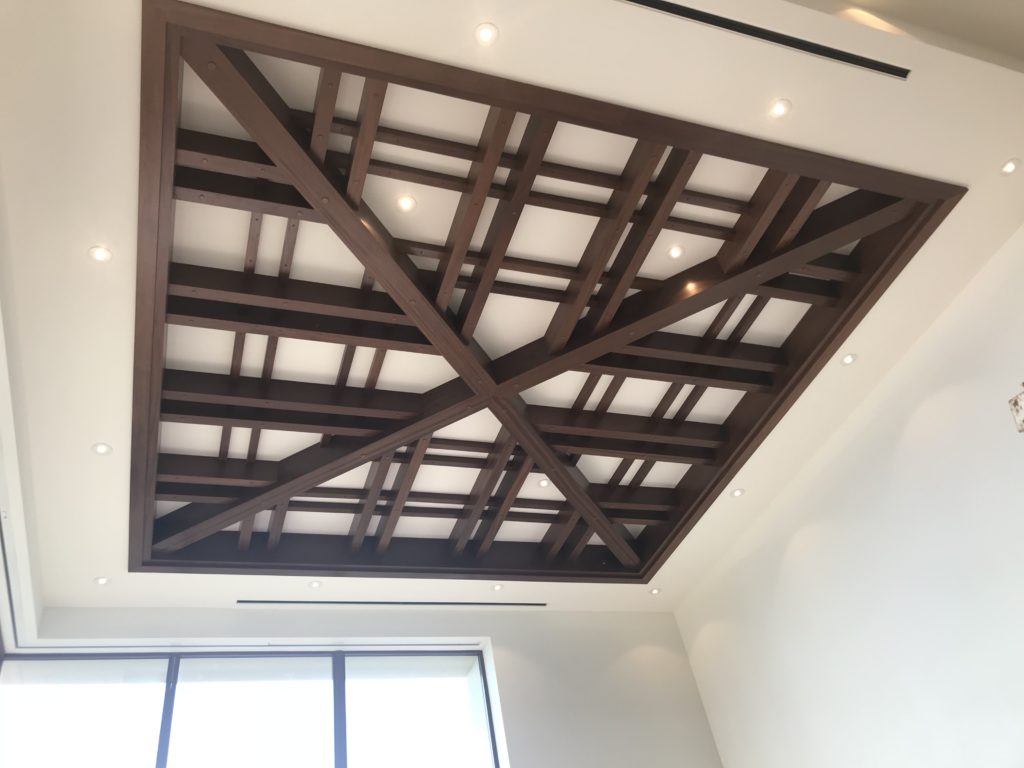
One of our most striking Sapele applications was a resort project in Hawaii requiring large-scale architectural beams with a warm tropical hardwood appearance. The solution: structural glulam beams wrapped in quartersawn Sapele veneer, producing continuous ribbon-stripe figure across a beam grid spanning the main lobby.
Key project details:
- Over 40 beams wrapped in sequence-matched quartersawn Sapele veneer
- Ribbon-stripe figure selected for maximum visual impact at the specified lighting angles
- Marine-grade adhesive and UV-protective catalyzed finish for the humid tropical environment
- Material cost approximately 55% of what Genuine Mahogany veneer would have specified at
- FSC-certified veneer sourced through McIlvain's African supply chain (FSC-C005402)
This project demonstrates Sapele's ideal role: delivering visual warmth and figured drama at architectural scale where Genuine Mahogany's workability advantage is irrelevant (veneer is sliced, not machined) and its cost would be prohibitive.
Our Recommendation
After supplying both species across six decades of millwork projects, our guidance is practical:
Default to Sapele for production doors, windows, exterior millwork, paneling, and any application where durability, supply reliability, and cost efficiency are priorities. It machines well with proper technique, finishes beautifully, and its ribbon-stripe figure is a design asset, not a compromise.
Specify Genuine Mahogany when the project demands intricate hand-carved details, historic material matching, or the absolute best straight-grain workability regardless of cost. Accept the longer lead times and higher price as the cost of irreplaceable material properties.
Both species are available from McIlvain in FAS kiln-dried lumber, quartersawn stock, veneer, and custom-milled profiles with full FSC documentation.
Frequently Asked Questions
Is Sapele a good substitute for Genuine Mahogany?
Yes. Sapele (Entandrophragma cylindricum) is one of the best substitutes for Genuine Mahogany in architectural millwork. It shares a similar reddish-brown color palette, machines well, and accepts stains and finishes readily. Sapele is actually harder (Janka 1,410 lbf vs. 800-900 lbf for mahogany), more dent-resistant, and costs approximately 60% of genuine mahogany's price. The main trade-off is workability: Sapele's interlocked grain requires more care during machining to avoid tearout, whereas mahogany's straight grain allows effortless profiling of fine details.
Why is Genuine Mahogany so expensive?
Genuine Mahogany (Swietenia macrophylla) is expensive because it is listed under CITES Appendix II, which restricts international trade to protect wild populations. All exports require government-issued permits verifying sustainable harvest. This regulation limits supply, increases compliance costs, and extends lead times by 4-8 weeks. Additionally, centuries of selective harvesting have reduced old-growth populations, making large clear boards increasingly rare. As of 2026, kiln-dried FAS-grade Genuine Mahogany ranges from $12-$18 per board foot — roughly 40% more than Sapele.
What is the Janka hardness of Sapele vs. Mahogany?
Sapele has a Janka hardness rating of 1,410 lbf, while Genuine Mahogany (Swietenia macrophylla) rates 800-900 lbf according to the USDA Forest Products Laboratory. This means Sapele is approximately 55-75% harder than mahogany, making it significantly more resistant to dents, scratches, and wear. For context, Sapele's hardness is comparable to Hard Maple (1,450 lbf), while mahogany is closer to Black Walnut (1,010 lbf).
Is Genuine Mahogany endangered?
Genuine Mahogany (Swietenia macrophylla) is not classified as endangered but is regulated. It is listed under CITES Appendix II (trade-regulated since 2003) and classified as "Vulnerable" by the IUCN Red List. Legal harvest and export are permitted from certified plantations and sustainably managed natural forests with proper CITES documentation. Camden Zacker sources all mahogany through FSC-certified supply chains (FSC-C005402) with complete permit documentation maintained for every board foot.
What is Sapele's ribbon stripe figure?
Sapele's ribbon stripe is a distinctive visual pattern caused by the species' interlocked grain — fibers that alternate direction every few growth layers. When the log is quartersawn (cut radially), this interlocking produces alternating bands of light and dark that shimmer as the viewing angle changes, creating a chatoyant effect similar to satin fabric. The pattern is prized for architectural paneling, veneered beams, conference tables, and entry doors. Ribbon-stripe Sapele is often specified where designers want dramatic visual depth without the cost of rare figured mahogany or exotic burl veneers.
Which is better for exterior doors — Sapele or Mahogany?
Both species perform well in exterior doors, but each has advantages. Sapele is harder (1,410 vs. 800-900 lbf Janka) and its interlocked grain resists splitting at hinge screws and lock mortises, making it better for high-traffic commercial entries. Mahogany offers superior dimensional stability (lower shrinkage coefficients) and workability, making it preferred for intricate raised-panel designs and historic preservation where carved details must match existing millwork. Both require quality exterior finishes (marine spar varnish or exterior catalyzed lacquer) for UV and moisture protection. McIlvain supplies both species milled to standard and custom door-stile specifications.
Where does Camden Zacker source Sapele and Mahogany?
Camden Zacker sources Sapele from FSC-certified concessions in West Africa (primarily Cameroon and Ghana) and Genuine Mahogany from FSC-certified plantations and managed forests in Central and South America. As an FSC Chain of Custody certified company (FSC-C005402) operating since 1798, McIlvain maintains long-term relationships with responsible forestry operations spanning decades. All Genuine Mahogany shipments include full CITES Appendix II permit documentation. Both species are verified legal under the US Lacey Act and EU Timber Regulation.
Sources and Standards Referenced
- USDA Forest Products Laboratory — Wood Handbook: Wood as an Engineering Material (Janka hardness, density, shrinkage data)
- The Wood Database — Sapele (species identification and mechanical properties)
- The Wood Database — Honduran Mahogany (species identification and mechanical properties)
- CITES Appendices I, II, and III (international trade regulation status for Swietenia macrophylla)
- IUCN Red List — Swietenia macrophylla (conservation status assessment)
- National Hardwood Lumber Association (NHLA) — grading rules for tropical and domestic hardwoods
- Forest Stewardship Council (FSC) Chain of Custody Standard, FSC-STD-40-004 — info.fsc.org
- Camden Zacker Company project records and species performance documentation, 1960–2026