Why Teak on a Luxury Exterior
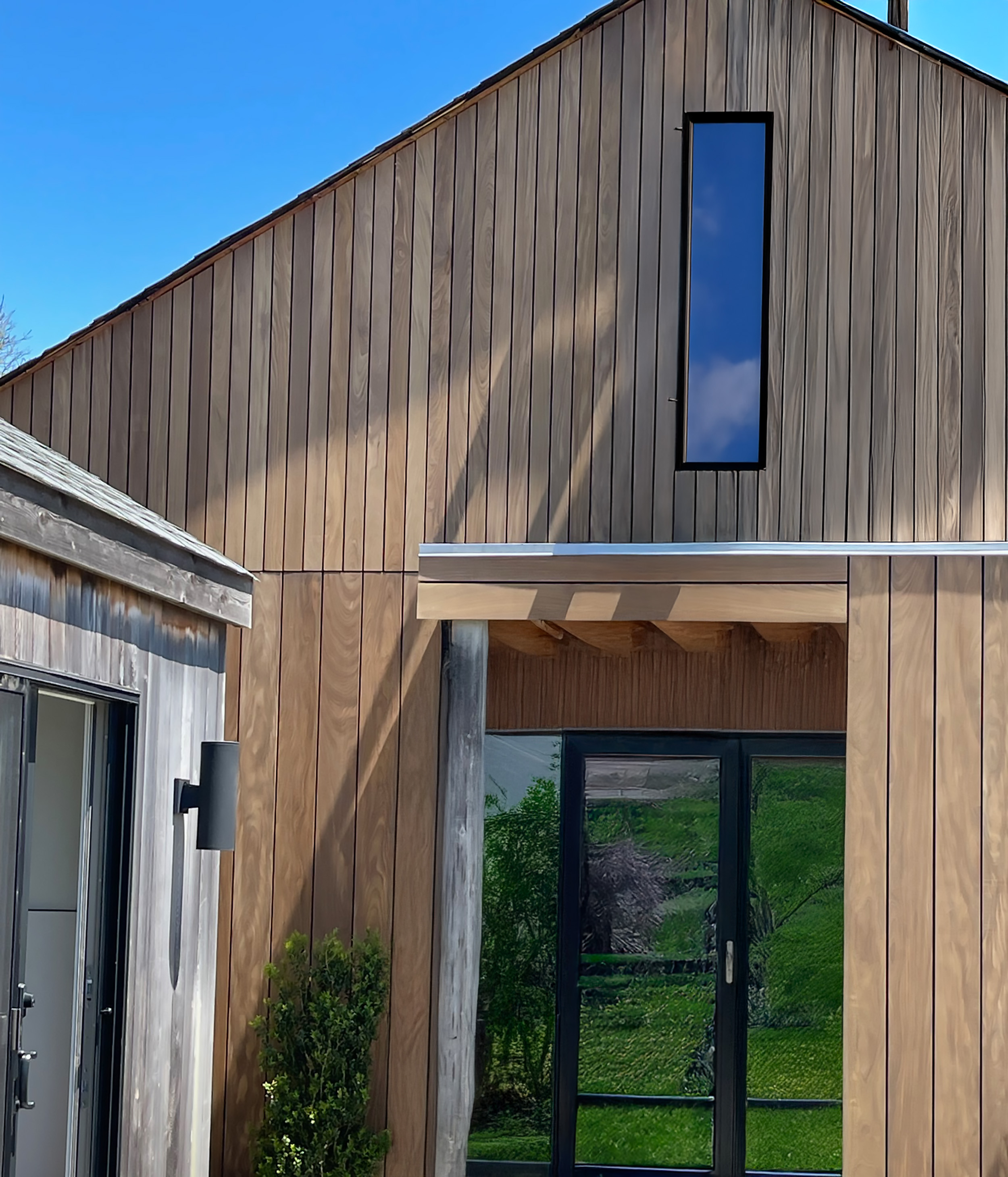
Teak is the wood boatbuilders trust in saltwater, and that pedigree is exactly why it shows up on high-end homes. Its natural oils and tight grain give it Class 1 durability and dimensional stability with none of the maintenance drama.
The color is part of the draw: a warm golden brown that reads rich under a clear oil. Teak sits around 1,070 lbf on the Janka scale, hard enough for a facade and light enough to work cleanly into screens and louvers. The USDA Forest Products Laboratory documents teak's stability and decay resistance among the best of any commercial hardwood. For the grades, see our teak lumber grades guide, and for a real-world example, our Salk Institute teak restoration.
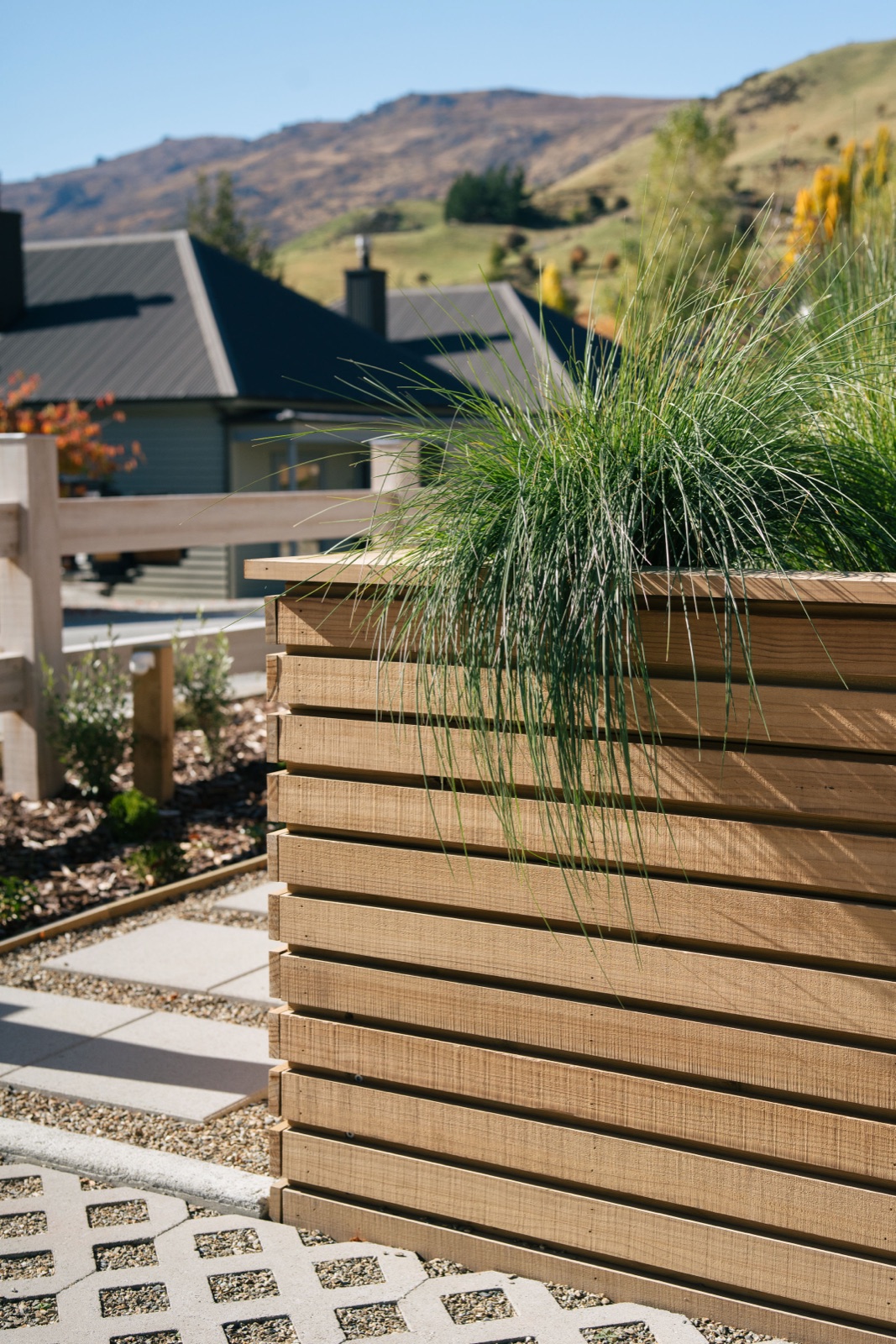
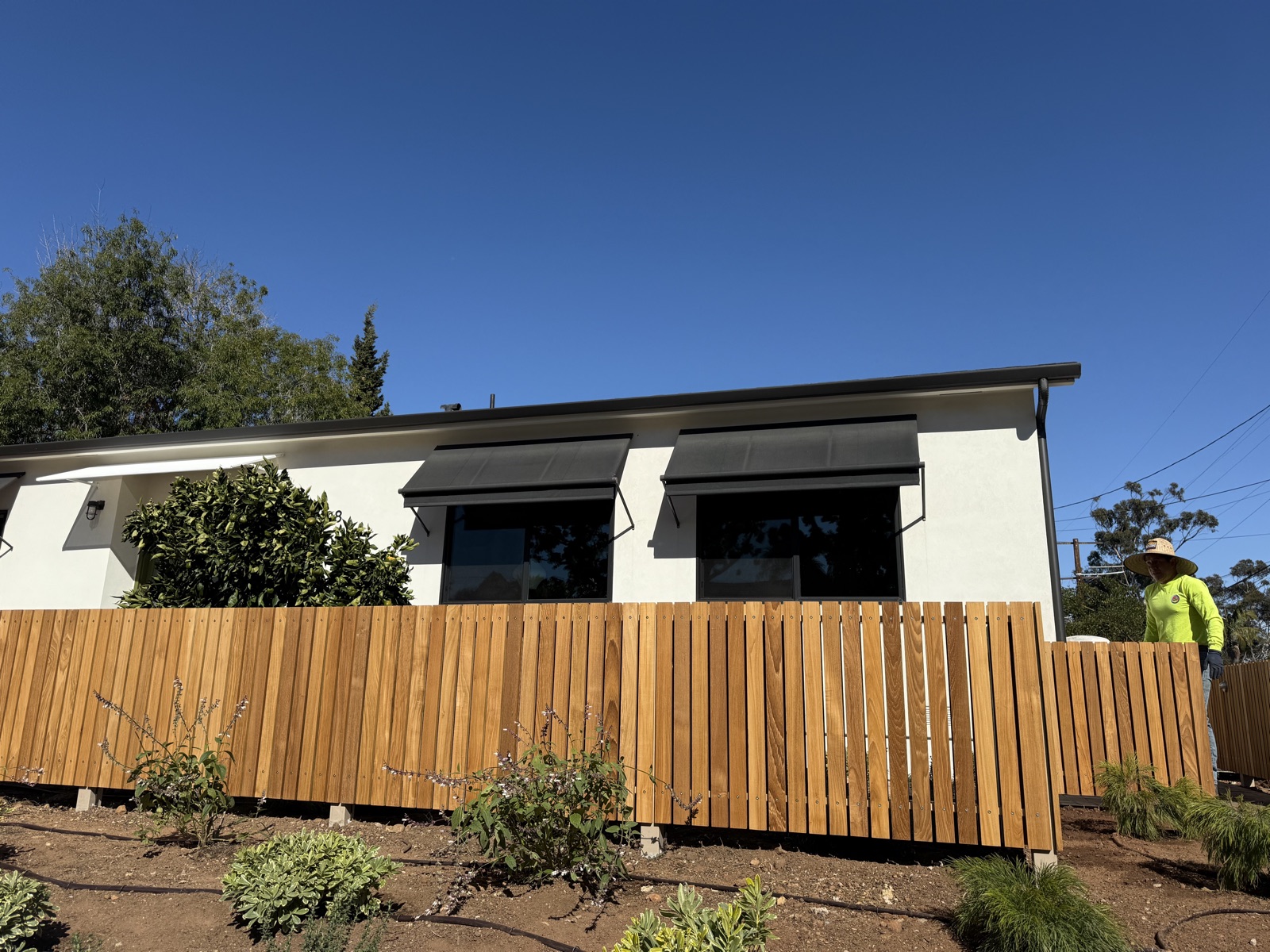
Privacy Walls, Screens, and Louvers
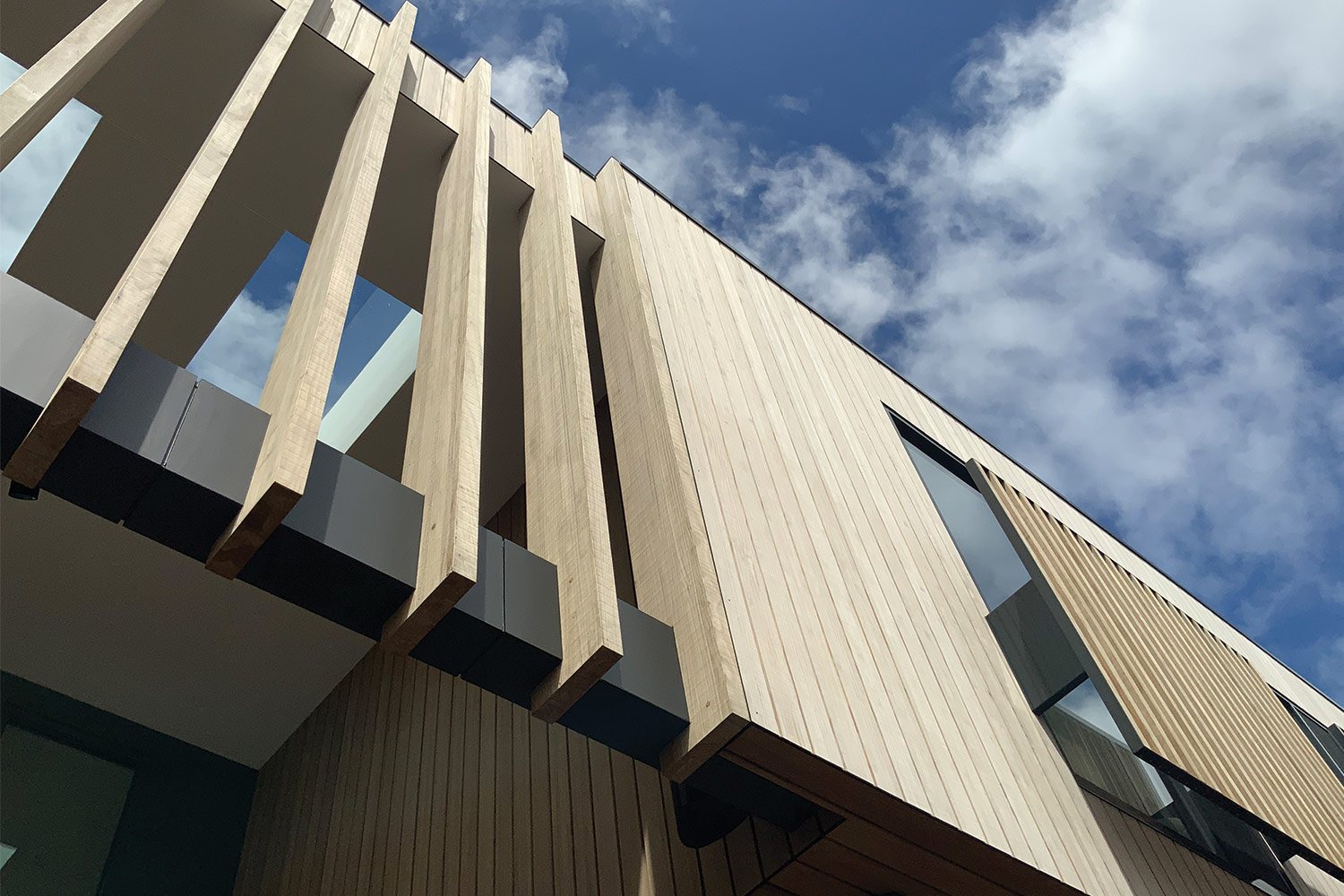
Teak's stability makes it a natural for privacy walls and screens, where members are exposed on all sides and any movement shows. A screen or louver has no wall behind it to hide a warped board, so the wood has to hold its shape.
Teak does, which is why it is specified for slatted privacy walls, brise-soleil, and louvered screens on luxury properties. The members are milled to the wanted profile and spacing, oiled or left to silver, and mounted to a concealed frame. Because they are exposed front and back, they oil on all faces before install. The same stability that keeps a screen straight keeps a cladding reveal tight.
| Property | Teak | Why it matters |
|---|---|---|
| Durability (EN 350) | Class 1 | Decades outdoors, marine-grade |
| Janka hardness | ~1,070 lbf | Workable for screens, hard enough for cladding |
| Stability | Very high | Holds screens straight and reveals tight |
| Natural oils | High | Decay and moisture resistance built in |
| Finish | Penetrating oil or silver naturally | Honey tone maintained, or low-maintenance gray |
Finish: Keep the Gold or Let It Silver
Teak gives you a clean choice: oil it to hold the golden color, or leave it to weather to an even silver gray. Both are legitimate, and both are low-maintenance by hardwood standards.
A penetrating oil keeps the honey tone and recoats without stripping, the way oil works on any dense hardwood; see our oil vs. film finishes guide. Left bare, teak silvers more evenly than most woods thanks to its oils, and it loses no durability doing it. Film finishes are not used, since teak's oils fight film adhesion and the film peels. As with any solid hardwood, the oil is maintenance, not a warranty.
Sourcing and Install Notes
Prefinished teak installs over a ventilated rainscreen with stainless fasteners, and screens mount to a concealed frame, with legal sourcing documented.
- Rainscreen: cladding goes over furring with a minimum 3/8 inch vented cavity; see our rainscreen guide.
- Fasteners: stainless throughout; T&G hides fasteners, shiplap gets face fastened, screens use concealed connections.
- Sourcing: teak should come with documented legal harvest, and FSC chain-of-custody paperwork where a project requires certified sourcing.
- Marine crossover: for decks and dock-adjacent work, see our marine-grade lumber guide.
"Teak sells itself on a luxury job. The color, the way it silvers if you let it, the fact that it does not move, that is why it ends up on the nicest houses and the screen walls around them. We source it, mill it to the profile or the louver spacing, oil it, and ship it with the legal-sourcing paperwork. You can keep the gold with oil or let it go gray. Either way it lasts, and it holds its shape, which matters most on a screen."
Camden Zacker, Sales Director, J. Gibson McIlvain Company
How J. Gibson McIlvain Sources Teak for Luxury Exteriors
J. Gibson McIlvain sources teak for cladding, screens, and privacy walls, milled to the profile or the louver spacing, oiled on all faces, and shipped nationwide. The team documents legal harvest and provides FSC chain-of-custody paperwork where a project requires certified sourcing. Teak is graded and selected for color and grain on high-end work, since a luxury facade lives on consistency.
Where a project wants a darker or even more rot-proof look, the team can lay teak next to Ipe, and where budget matters more than the teak pedigree, next to other tropical hardwoods. The recommendation pairs the material with a vented rainscreen for cladding and a concealed frame for screens, with the finish choice, oiled gold or natural silver, made up front.
Teak Sourcing Checklist
| Item | Why it matters |
|---|---|
| Application | Cladding, screen, louver, or privacy wall. |
| Finish choice | Oil to hold gold, or silver naturally. |
| Profile or member spacing | Face width and reveal, or louver size and gap. |
| Grade and color | Selected for consistency on luxury work. |
| Legal sourcing | Documented harvest, FSC where required. |
| Rainscreen or frame | Vented cavity for cladding, concealed frame for screens. |
Where Teak Orders Usually Fail
- Film finish on teak: the oils fight film adhesion; use penetrating oil or let it silver.
- Unstable substitute in a screen: screens show any movement; teak's stability is the point.
- No legal-sourcing paperwork: document harvest, with FSC where required.
- Expecting a warranty on solid teak: the oil is maintenance, not a warranty.
- No rainscreen on cladding: even teak cladding needs a vented cavity to dry.
Ordering Information to Resolve Before Pricing
- Application: cladding, screen, louver, or privacy wall.
- Finish: oiled gold or natural silver.
- Profile or spacing: face width and reveal, or louver size and gap.
- Sourcing: legal-harvest documentation, FSC where required.
- Logistics: square footage or member count, lengths, delivery, lead time.
Related J. Gibson McIlvain Guidance and Next Steps
Frequently Asked Questions
Where can I buy prefinished teak cladding and privacy walls?
Prefinished teak comes from a specialty hardwood supplier that stocks teak, mills the profile or the screen members, and oils the wood before it ships. J. Gibson McIlvain sources teak for cladding, screens, and privacy walls, finishes it on all faces, documents legal harvest with FSC paperwork where required, and ships nationwide. The wood arrives ready to install as cladding over a rainscreen or as screen members on a concealed frame.
Why is teak used for privacy walls and screens?
Teak is highly dimensionally stable, so it holds its shape where members are exposed on all sides, which is exactly the condition in a slatted privacy wall, louver, or brise-soleil. There is no wall behind a screen to hide a warped board, so the wood has to stay straight, and teak does. Its natural oils and Class 1 durability also let it handle full exposure without a maintenance-heavy finish.
Should teak be oiled or left to weather?
Both work. A penetrating oil holds teak's golden color and recoats without stripping, while leaving it bare lets it weather to an even silver gray, more evenly than most woods thanks to its oils, with no loss of durability. Film finishes are not used, since teak's oils fight film adhesion and the film peels. The choice is aesthetic, and both are low-maintenance by hardwood standards. The oil is maintenance, not a warranty.
Is teak sourced legally and sustainably?
Teak should come with documented legal harvest, and FSC chain-of-custody paperwork where a project requires certified sourcing. J. Gibson McIlvain documents legal harvest and provides FSC paperwork where required across the teak it supplies. On institutional or luxury projects that call for certified material, the documentation travels with the order, so a specifier can show the wood came from a legal, certified source.
How does teak compare to Ipe for a luxury facade?
Teak brings a golden color, marine-grade stability, and a lighter working weight, which suits screens and louvers as well as cladding. Ipe is denser and harder, reaches Class A fire performance untreated, and reads darker. Both are Class 1 durable and both take a penetrating oil or silver naturally. The choice comes down to color, whether fire rating matters, and whether the design leans on teak's screen-friendly workability. J. Gibson McIlvain supplies both.
Sources and Standards Referenced
- USDA Forest Products Laboratory - Teak durability and stability
- National Hardwood Lumber Association - Hardwood grading rules
- Forest Stewardship Council - Chain of custody certification
- American Wood Council - Wood construction standards
- Building Science Corporation - Rainscreen and cladding detailing